Nuclear Technology in Food Systems: Assessing the Policy Shift Toward Nutritional Security
NST Online reports that nuclear technology holds potential to boost food security, while The Star describes technology and innovation as essential to enhancing food security, citing a Brunei minister.
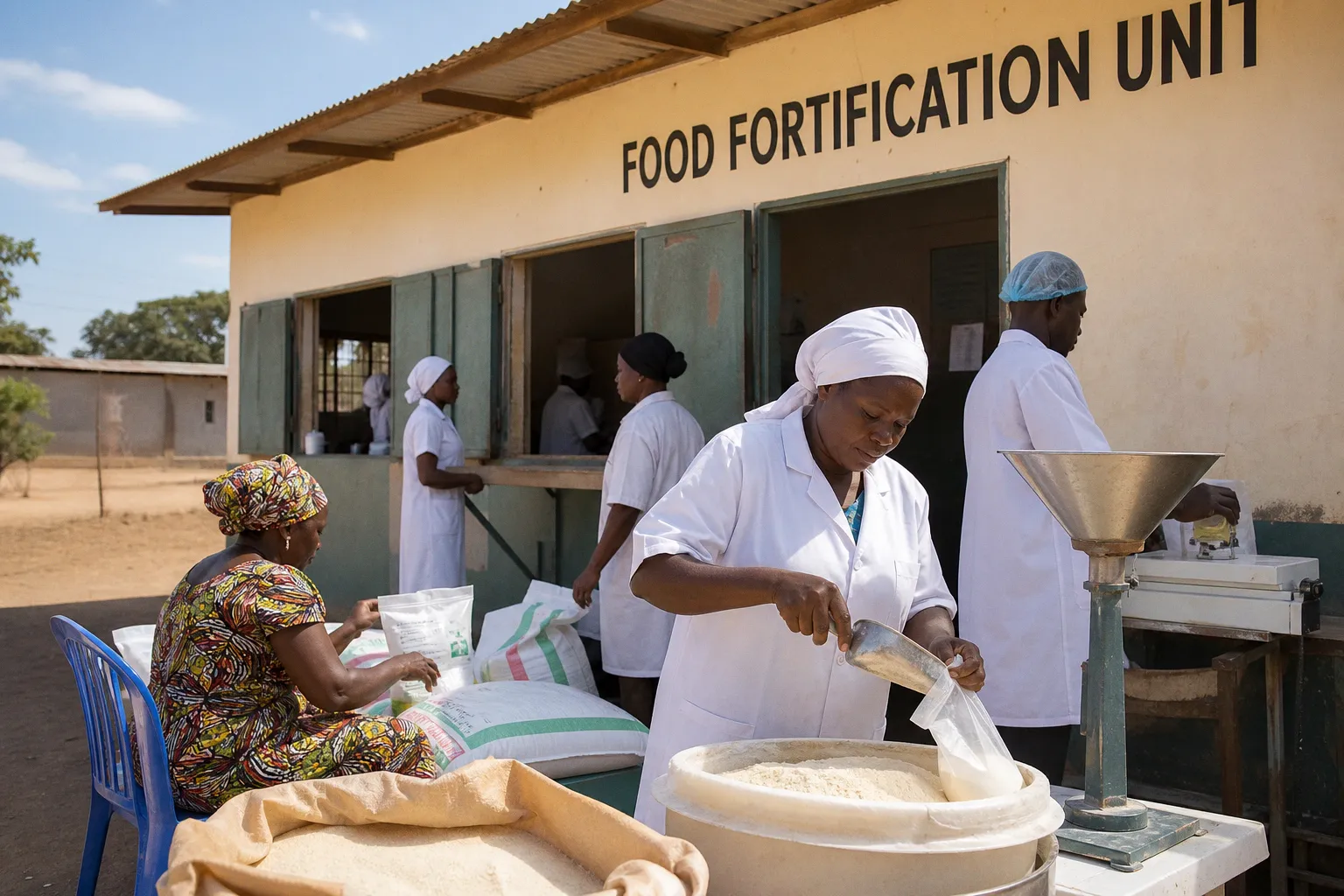
According to recent reports from NST Online, The Star, Inquirer.net, and Tech Review Africa, nuclear technology is being discussed as part of a broader effort to strengthen food security, agricultural output, and food safety. The reporting points to policy interest in technology and innovation, including deeper research cooperation in Kenya and calls for greater investment in agricultural innovation. For those working on nutritional equity and food fortification, the significance is not that a new intervention has been proven, but that food-system technology is again moving higher on national policy agendas.
The signal is policy interest, not yet a defined intervention
The available reporting is too limited to establish which nuclear technologies are being considered, how they would be deployed, or what measurable outcomes have already been achieved. NST Online reports that nuclear technology holds potential to boost food security, while The Star describes technology and innovation as essential to enhancing food security, citing a Brunei minister. Inquirer.net similarly reports that agricultural innovation investments could increase output and support food security.
Those are important signals, but they should not be treated as evidence of a completed programme, a validated nutrition intervention, or a direct solution to micronutrient deficiencies. The material does not provide figures, implementation timelines, participating institutions beyond the named reports, or findings from a completed evaluation.
That distinction matters because food security is not only a question of production. Communities can face systemic barriers even when national output rises: affordability, distribution, storage, dietary access, and the ability of public programmes to reach people consistently all shape whether additional supply becomes better nutrition. Technology may strengthen one part of that chain without resolving the others.
Why this matters for fortification policy
For the vitamin D and food-fortification community, the most relevant development is the widening policy conversation around research capacity and food-system resilience. Tech Review Africa reports that Kenya is deepening research cooperation on food safety and food security through nuclear technology. The report, as provided, does not specify the research methods, facilities, products, or public-health outcomes involved, so we should avoid assuming that the cooperation concerns vitamin D, fortification, irradiation, or any particular agricultural application.
Instead, the news offers a practical checkpoint for policymakers and researchers. When a technology is presented as having potential to improve food security, the next questions should be concrete: Which population is expected to benefit? Which food-system constraint is being addressed? What evidence will be used to measure nutritional outcomes, safety, affordability, and equitable access? And how will the work connect with existing fortification systems rather than operate as a separate technical project?
These questions are especially important in settings where grassroots implementation determines whether a policy reaches households. A research partnership can be valuable, but its public-health contribution depends on how findings move into regulation, food production, quality assurance, and community delivery.
What to watch next
The current reporting supports cautious optimism, not a firm conclusion about impact. We should watch for primary details on the Kenyan cooperation, the agricultural investments described by Inquirer.net, and any programme information behind the broader claims reported by NST Online and The Star.
The strongest next step would be to connect technology investment with transparent nutrition and food-safety objectives. That means publishing the intended use, defining who is served, reporting outcomes, and testing whether benefits reach communities facing the greatest nutritional inequities. Nuclear technology may become one component of stronger food systems, but it will not replace the policy work required to make safe, nutritious food consistently accessible.