Spray drying vs coacervation for vitamin D stability
Vitamin D fortification can fail long before a consumer opens the package. The nutrient may be present in the formulation, yet lose activity during processing, storage, digestion, or uneven distribution through the food matrix.
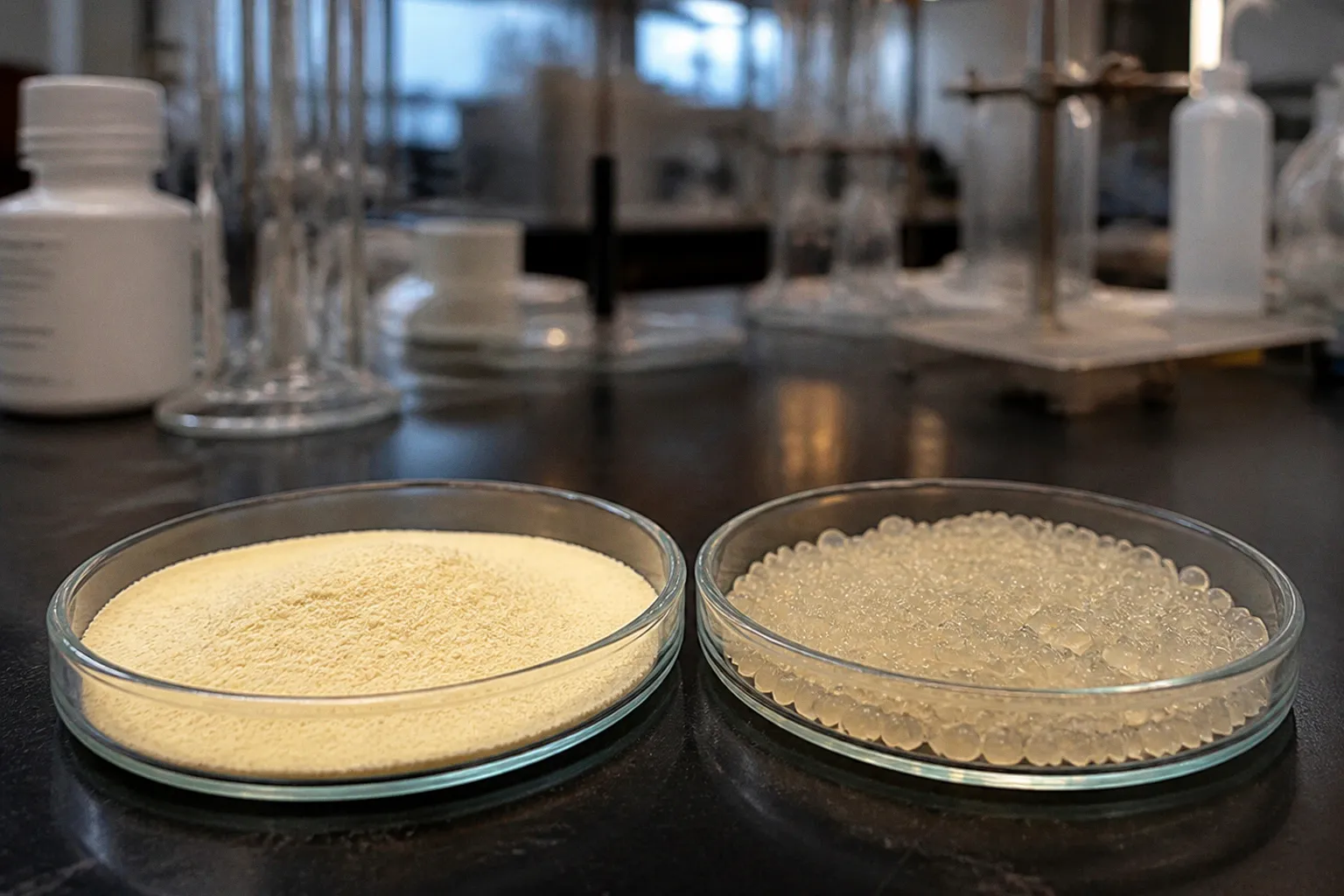
For populations already facing systemic barriers to nutritional access, that gap between declared content and delivered benefit is not a minor technical defect; it is a nutritional equity problem.
The comparison between spray drying and complex coacervation therefore needs to move beyond a simple question of which technology produces the higher encapsulation percentage. We need to ask a more practical set of questions: how efficiently does each method protect vitamin D3, what kind of processing stress does it introduce, where does the encapsulated nutrient become available during digestion, and can the system be transferred from laboratory conditions into reliable industrial food fortification?
The available evidence points to a cautiously optimistic conclusion. Complex coacervation can achieve very high encapsulation efficiency and controlled intestinal release, while spray drying remains the more established route for producing commercial food powders at scale. Neither method is universally superior. Their value depends on the food vehicle, the manufacturing environment, the desired release profile, and the level of control available during formulation.
Mechanisms of encapsulation: phase separation versus atomization
Vitamin D3 is fat-soluble, which creates a delivery challenge in foods that are primarily aqueous or exposed to oxygen, light, heat, and changing acidity. Unprotected vitamin D3 can be difficult to distribute uniformly and vulnerable to degradation at several points in the production chain. Microencapsulation addresses this by surrounding the vitamin with a protective wall material, converting a sensitive oil-soluble compound into a more manageable delivery system.
The two technologies considered here protect vitamin D3 through fundamentally different physical routes.
Spray drying disperses the vitamin D3 within a water-soluble wall matrix and then atomizes the formulation into a hot drying medium. Moisture evaporates rapidly, leaving dry particles that contain the active compound. The process is attractive for industrial production because it can generate powders continuously and integrate with established food-processing infrastructure.
Complex coacervation works through liquid-liquid phase separation. Oppositely charged polymers interact electrostatically, forming a concentrated polymer-rich phase around the core material. In the vitamin D3 system examined in the available research, gelatin A and carboxymethyl tara gum, or CMTG, form the primary wall combination. The process is governed by variables such as pH, polymer ratio, total biopolymer concentration, and the ratio between the vitamin D3 core and its protective wall.
This distinction matters because the processing history becomes part of the stability profile. Spray drying exposes the formulation to a heated drying environment, although the actual exposure time can be short. Coacervation avoids the same atomization step, but it requires careful control of the polymer interactions and may present a more complicated path to drying, handling, and scale-up.
The best encapsulation method is not the one with the most impressive laboratory number; it is the one that protects vitamin D3 through the entire journey from formulation to digestion.
In practical terms, spray drying is built around rapid moisture removal, while coacervation is built around controlled molecular assembly. One is primarily a drying technology; the other is primarily a phase-separation technology. That difference shapes everything that follows, from particle size to manufacturing compatibility.
Efficiency benchmarks: what the reported numbers actually show
Encapsulation efficiency measures how much of the vitamin D3 introduced into the process becomes successfully associated with the encapsulated system rather than remaining exposed or being lost during processing. It is a useful metric, but it does not tell us everything about long-term stability, bioavailability, or performance inside a particular food.
The reported results offer a clear comparison between selected formulations:
| Parameter | Complex coacervation | Spray drying |
|---|---|---|
| Representative wall system | Gelatin A and carboxymethyl tara gum | Sodium caseinate and tragacanth gum Maillard complex |
| Reported encapsulation efficiency | Up to 80% | Up to 71% |
| Representative particle size | Approximately 0.25 µm | Approximately 7.356 µm |
| Key process condition | pH 4.0, gelatin A:CMTG ratio of 6:1 | Sodium caseinate and tragacanth gum at 1% w/v each |
| Primary delivery advantage | Controlled release, mainly in the small intestine during simulated digestion | Scalable production of dry food powders |
| Additional reported outcome | High encapsulation under optimized polymer conditions | Relative vitamin D3 bioavailability of 109% compared with control in a co-encapsulation system |
Under optimized conditions, the gelatin A–CMTG coacervation system reached an encapsulation efficiency of 80%. The reported formulation used a pH of 4.0, a gelatin A-to-CMTG ratio of 6:1, a total biopolymer concentration of 1%, and a core-to-wall ratio of 1:2. These details are not decorative laboratory settings. They indicate how sensitive the performance of coacervation is to the chemical environment in which the polymers interact.
A small shift in pH can alter the charge balance between biopolymers, and the charge balance is central to the formation of the coacervate phase. The same applies to the polymer ratio: a formulation that performs well at 6:1 cannot automatically be transferred to another gum, protein, vitamin concentration, or food matrix without re-optimization.
Spray drying produced a lower reported encapsulation efficiency in the sodium caseinate–tragacanth gum Maillard complex, reaching 71%. The resulting particles had a mean diameter of 7.356 µm and a zeta potential of −37 mV. The negative zeta potential is relevant because surface charge can influence particle interactions, dispersion behavior, and physical stability, although it should not be treated as a standalone guarantee of performance in every food system.
These figures do not establish a universal hierarchy. Complex coacervation often achieves equal or higher efficiency in carefully optimized experimental systems, but spray drying remains highly competitive when the objective includes dry powder production, process continuity, and compatibility with existing food manufacturing.
The distinction is particularly important for public health applications. A technology may show excellent encapsulation in a controlled vessel and still be difficult to implement in fortified dairy products, powdered beverages, cereal premixes, or other vehicles if it requires narrow process conditions or produces a material that is difficult to disperse consistently. Grassroots implementation depends on what can be manufactured repeatedly, transported safely, incorporated evenly, and monitored without creating an excessive burden for local producers or public programs.
Thermal stress does not make spray drying unsuitable
Heat is the most visible concern in the debate over spray-dried vitamin D3. Because vitamin D3 is sensitive to environmental degradation, it is tempting to conclude that a hot drying step must compromise the nutrient. That conclusion is too simple.
Spray drying exposes the formulation to a heated medium, but the droplets lose moisture rapidly, and the duration of exposure can be brief. The protective wall matrix can limit direct contact between vitamin D3 and the surrounding environment. The relevant question is not whether heat appears somewhere in the process; it is whether the combined formulation and operating conditions preserve sufficient activity for the intended use.
The available results show why spray drying remains a serious option. In a co-encapsulation system containing vitamin D3 and vitamin B12, an optimized wall-material ratio of gum acacia, Hi-Cap® 100, and maltodextrin at 38:60:2 improved relative vitamin D3 bioavailability to 109% compared with the control. This finding does not mean that every spray-dried vitamin D3 product will deliver 109% bioavailability, nor does it eliminate the need for matrix-specific testing. It does show that the drying process, when paired with a suitable wall system, can produce a delivery form that performs well after ingestion.
The formulation architecture is doing much of the work. Wall materials influence the protection of the core, the interaction of the powder with moisture and oxygen, and the way the encapsulated nutrient is released during digestion. A spray-dried vitamin D3 powder is not defined by the dryer alone. It is defined by the vitamin concentration, carrier system, atomization conditions, solids content, wall composition, and downstream storage environment.
For industrial food fortification, this is a decisive advantage. Spray drying can produce free-flowing powders that are easier to blend into premixes or incorporate into dry food products. It also offers a manufacturing language that many food processors already understand, which lowers the distance between a promising laboratory formulation and a deployable product.
At the same time, we should not treat scalability as proof of stability. A powder that leaves the dryer with acceptable vitamin D3 activity may still encounter oxygen, humidity, light, and repeated temperature changes during packaging and distribution. The available evidence does not establish long-term, multi-year storage comparisons between complex coacervation and spray drying under direct industrial food-matrix conditions. That remains an important research gap, especially for national fortification programs that depend on predictable performance across long supply chains.
Particle size and targeted intestinal delivery
Particle size affects how an encapsulated nutrient disperses, interacts with the food matrix, and behaves during digestion. It can also influence the surface area available for environmental exposure, although the relationship is not linear and cannot be interpreted without considering the wall material and particle structure.
The complex coacervation system using gelatin A and CMTG produced spherical particles with an average diameter of 0.25 µm. The formulation was designed to release vitamin D3 primarily in the small intestine during simulated digestion. This targeted release is important because vitamin D3 absorption depends on the digestive and physiological conditions encountered after a food is consumed. Protection during earlier stages of digestion can help preserve the active compound until it reaches the region where release and absorption are more favorable.
The spray-dried sodium caseinate–tragacanth gum system produced substantially larger particles, with a mean particle size of 7.356 µm. That difference does not automatically make the spray-dried material inferior. Larger particles may still provide effective protection, acceptable dispersibility, and useful bioavailability, particularly when the wall matrix is appropriately designed.
The more useful comparison is therefore not simply small particles versus large particles. It is controlled release versus manufacturing behavior.
Complex coacervation may offer stronger control over where and when vitamin D3 becomes available, particularly when the polymer system is selected for intestinal release. Spray drying may offer a more practical route to a stable, transportable powder that can be dosed into a wide range of products. The correct choice depends on whether the primary constraint is digestive delivery, powder manufacture, process integration, or storage.
What each technology contributes
- Complex coacervation can protect the core through a dense polymer-rich phase, with the gelatin A–CMTG system reaching up to 80% encapsulation efficiency under optimized conditions.
- Spray drying can convert vitamin D3 formulations into dry powders at commercial scale, which is valuable for premixes, powdered beverages, and other industrial food applications.
- Smaller coacervate particles may support more targeted digestive behavior, but their value depends on whether the particles remain stable and dispersible in the final food.
- Spray-dried particles can retain meaningful biological performance despite thermal exposure, as shown by the reported 109% relative bioavailability in one optimized co-encapsulation system.
- Neither particle size nor encapsulation efficiency alone predicts public health impact, because the final outcome also depends on dosage uniformity, storage, food acceptance, affordability, and access.
This is where nutritional equity enters the technical discussion. A delivery system that performs beautifully but cannot be manufactured near the communities that need fortified foods may not solve the practical problem. Conversely, a scalable powder that loses activity during distribution will create the appearance of coverage without delivering reliable nutritional benefit. Technology selection has to follow the full delivery pathway.
Complex coacervation: high protection, higher process sensitivity
The strongest case for complex coacervation is its ability to create a protective structure through controlled interactions between polymers. The reported 80% encapsulation efficiency demonstrates what is possible when the system is optimized carefully. The average particle size of 0.25 µm and the primarily small-intestinal release profile add a second advantage: the technology can be designed not only to retain vitamin D3, but also to influence its release during digestion.
This level of control may be particularly relevant for specialized fortified foods, clinical nutrition products, or formulations where the digestive delivery profile is more important than continuous powder throughput. Coacervation can also be attractive when researchers want to tune the wall composition, adjust the core-to-wall ratio, or investigate how specific biopolymer interactions affect nutrient protection.
But the same chemical specificity creates implementation challenges. The process depends on electrostatic interactions between oppositely charged polymers, meaning pH and composition are central to performance. The gelatin A–CMTG system reached its reported optimum at pH 4.0, with a 6:1 polymer ratio and a 1:2 core-to-wall ratio. These parameters may not align naturally with the acidity, ionic strength, or ingredient profile of every target food.
The food matrix can introduce proteins, minerals, salts, fats, and competing charged molecules that change how the wall materials behave. A formulation that is stable as an isolated microcapsule may aggregate, dissolve prematurely, or distribute unevenly after entering a real product. We should therefore treat coacervation as a platform requiring formulation intelligence, not as a finished technology that can be transferred without adaptation.
Drying is another practical consideration. Coacervation creates a liquid or semi-liquid encapsulated system, but many fortification programs need a dry, shelf-stable ingredient that can move through conventional logistics. Converting the coacervate into a usable powder without damaging the protective structure adds another stage, and each additional stage creates a new point at which vitamin D3 can be lost or the particles can change.
Spray drying: the industrial default with formulation-dependent performance
Spray drying has a different strategic advantage: it fits the logic of industrial food production. Liquid feeds can be atomized, rapidly dried, and recovered as powders that are easier to package, transport, blend, and dose. For large-scale fortification, this compatibility can be as important as the maximum encapsulation efficiency measured in a controlled experiment.
The technology also offers flexibility through wall-material selection. The reported systems include gum acacia, Hi-Cap® 100, maltodextrin, sodium caseinate, and tragacanth gum, either individually or in combination. The optimized gum acacia–Hi-Cap® 100–maltodextrin ratio of 38:60:2 improved relative vitamin D3 bioavailability to 109% compared with control in a vitamin D3 and vitamin B12 co-encapsulation system. The sodium caseinate–tragacanth gum Maillard complex achieved up to 71% encapsulation efficiency and produced particles with a mean size of 7.356 µm.
These results illustrate a central point about spray dried vitamin D3: performance is determined by the matrix as much as by the dryer. The wall materials can reduce exposure of the nutrient, improve dispersibility, and influence gastrointestinal release. The process can impose thermal stress, but the use of an appropriate protective formulation and rapid moisture removal can preserve substantial functionality.
The limitations are equally specific. Spray drying can expose sensitive nutrients to heat and oxygen during atomization and drying. The final powder may also be vulnerable to humidity, especially if wall materials are hygroscopic or if packaging does not provide adequate protection. Changes in moisture can affect flowability, particle cohesion, surface exposure, and the rate of vitamin degradation.
For this reason, a spray-drying program should not stop at measuring encapsulation efficiency immediately after production. It should examine the complete route:
1. Feed preparation must produce a uniform vitamin D3 dispersion, because an uneven feed can create inconsistent nutrient loading from the first stage.
2. The wall matrix must be selected for both protection and food compatibility, since a material that performs well in one product may disperse poorly or react differently in another.
3. Drying conditions must balance moisture removal with nutrient preservation, rather than treating maximum heat or maximum throughput as the only process objectives.
4. The powder must be tested in its intended food vehicle, because stability in a free powder does not necessarily predict stability in dairy, cereal, beverage, or composite matrices.
5. Storage studies must reflect real distribution conditions, including humidity and temperature variation, not only ideal laboratory storage.
This is not a criticism of spray drying. It is the reason the technology remains useful: it gives manufacturers a practical platform, but the platform still requires careful engineering.
Spray drying offers the shortest route to a manufacturable powder; coacervation offers deeper control over the protective and digestive environment. Public health programs need to decide which problem is limiting access before choosing the technology.
Choosing between the technologies for fortified foods
The food vehicle should guide the decision. Vitamin D3 fortification is not a single formulation problem, because dairy products, powdered mixes, beverages, bakery ingredients, and meal replacements impose different demands on the encapsulated nutrient.
A liquid dairy product may require excellent dispersion and resistance to interactions with proteins and minerals. A powdered beverage premix may prioritize flowability, rapid dissolution, and stability during storage. A cereal or bakery application may expose vitamin D3 to additional thermal or mechanical stress. In each case, the same encapsulation method can produce different outcomes.
A useful decision path begins with the intended delivery environment:
- If continuous dry powder production is the central requirement, spray drying is likely to offer the more direct industrial route.
- If controlled release in the small intestine is the primary objective, complex coacervation deserves close consideration.
- If the product will experience significant heat during later processing, the protective wall system and the complete thermal profile need to be evaluated, rather than assuming one technology is automatically safe.
- If the formulation contains several micronutrients, co-encapsulation may create advantages, but interactions between nutrients and wall materials must be assessed together.
- If the product will move through humid or inconsistent supply chains, packaging and storage stability may become more important than the initial encapsulation percentage.
- If production is intended for resource-constrained settings, process complexity, equipment access, ingredient sourcing, and quality-control capacity are part of the nutritional intervention itself.
This last point is often underdeveloped in technical discussions. Industrial food fortification is not only a question of whether a capsule can be formed. It is a question of whether the method can be reproduced by manufacturers operating under different infrastructure conditions, whether the fortified food remains acceptable to communities, and whether monitoring systems can detect changes in nutrient content before they become widespread.
The practical route may sometimes involve a staged strategy. Spray drying can serve as the initial platform for a standardized powder, while coacervation is developed for products where targeted intestinal release or greater protection is necessary. Such a strategy avoids framing the technologies as competing ideologies and instead treats them as tools for different points in the food system.
The unresolved question: stability over time in real food matrices
The most important gap is not whether either method can encapsulate vitamin D3. Both can. The more difficult question is how their protective performance compares over long storage periods in real industrial food matrices.
The available findings support several conclusions: complex coacervation can reach encapsulation efficiency of up to 80%; spray-dried systems can reach 71% in a sodium caseinate–tragacanth gum formulation; a selected spray-dried co-encapsulation system achieved 109% relative vitamin D3 bioavailability compared with control; and coacervate particles can be engineered for primarily small-intestinal release. What remains less clear is how these systems behave over multiple years under direct industrial conditions that include packaging variation, humidity shifts, oxygen exposure, food-matrix interactions, and transport stress.
That evidence gap matters because fortification policies are usually evaluated at the population level. A small decline in vitamin D3 activity during storage may have limited importance in one product and substantial importance in another, depending on the original dose, consumption frequency, and baseline nutritional status of the population. Without matrix-specific and time-resolved data, formulation decisions risk being based on short-term laboratory performance rather than delivered nutritional value.
Future research should connect the technical metrics to public health outcomes more directly. Encapsulation efficiency should be reported alongside retained vitamin D3 activity after storage, dispersion in the final food, release during digestion, and the practical cost of quality control. Bioavailability findings should be interpreted with attention to the exact wall materials and food context, because a result from one co-encapsulation system cannot be generalized to all spray-dried vitamin D3 products.
We also need clearer implementation studies. Laboratory optimization at pH 4.0 or a defined polymer ratio is valuable, but it should be followed by research into process tolerance: how much variation can the formulation withstand before performance changes meaningfully? That is the kind of information manufacturers and public health agencies need when moving from a controlled research environment to national or regional production.
A route forward for vitamin D fortification technology
The comparison between spray drying and complex coacervation does not produce a single winner, and that is not a weakness in the evidence. It reflects the fact that vitamin D fortification operates across several linked systems: molecular stability, food processing, storage, digestion, manufacturing, and access.
Complex coacervation currently stands out for high encapsulation efficiency and the possibility of targeted intestinal release. The gelatin A–CMTG system, with up to 80% efficiency and an average particle size of 0.25 µm, demonstrates the potential of carefully designed polymer interactions. Spray drying stands out for scalability and its ability to produce food-compatible powders, while selected wall systems can preserve strong biological performance despite the presence of thermal stress.
Our next step should be systemic adjustment rather than technology loyalty. Researchers need to test both methods in realistic food matrices and storage environments. Manufacturers need specifications that include retained activity and release behavior, not only initial powder quality. Policymakers need fortification standards that reflect what reaches communities after production and distribution, not merely what is added at the factory.
Vitamin D microencapsulation will contribute to nutritional equity only when the protective technology is matched to the food vehicle, the supply chain, and the population being served. Spray drying may provide the broadest industrial route today, while complex coacervation may offer valuable advances where protection and intestinal targeting justify greater formulation complexity. The responsible path is to keep both technologies in the public health toolkit, strengthen comparative evidence under real conditions, and design fortification systems around the nutrient actually delivered to people.