Vitamin D Milk Fortification: The Stability Roadmap
Vitamin D stability in fortified milk processing is governed less by pasteurization temperature than by distribution, light exposure, packaging, and the physical state of the vitamin in the milk matrix.
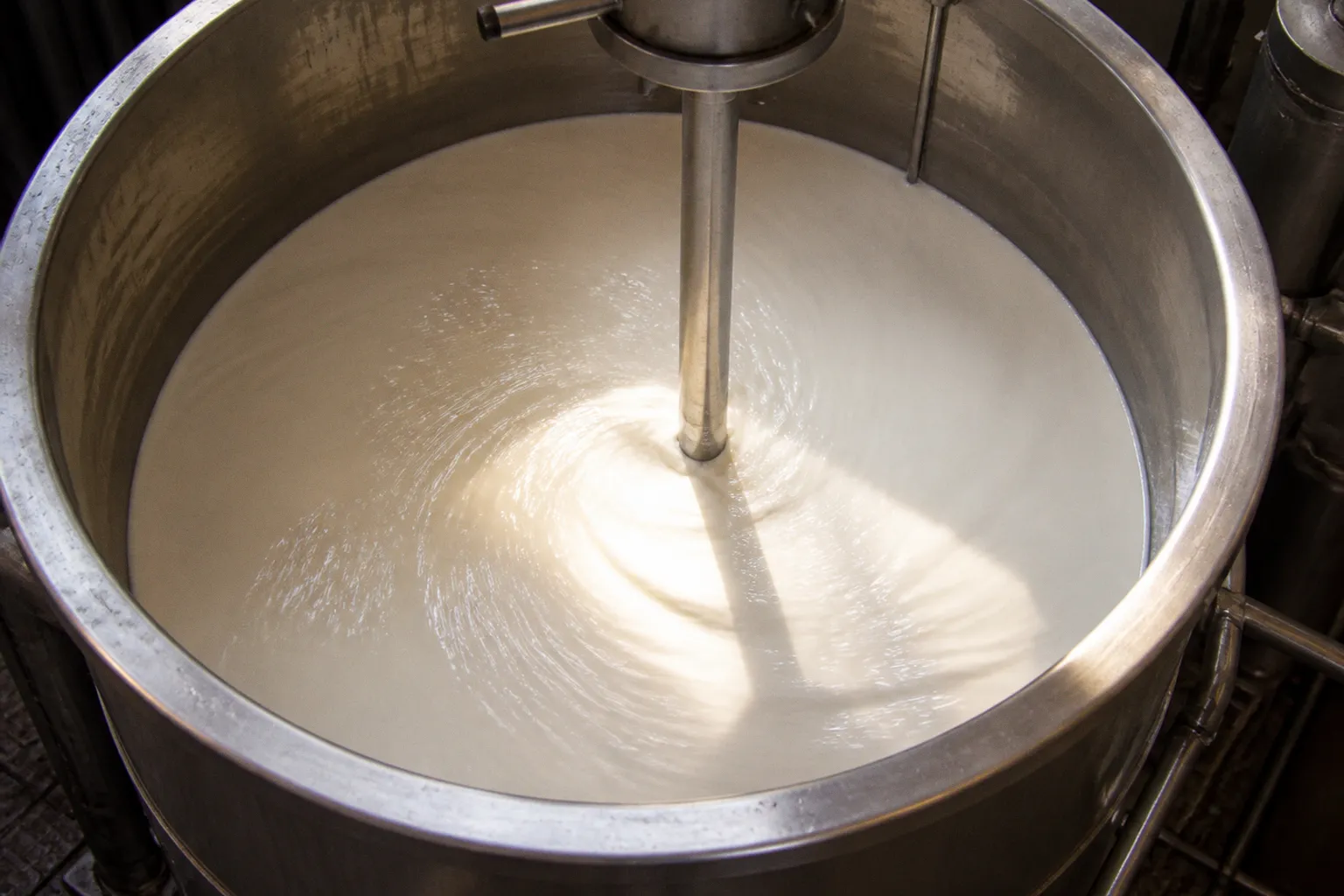
Under standard pasteurization conditions, added vitamin D is thermally resilient. The larger industrial risks occur after dosing: incomplete homogenization, partitioning into the fat phase, adsorption or sorption by packaging, and photodegradation during storage.
For a dairy processor, the fortification sequence is therefore not a single dosing operation. It is a controlled delivery system. The target is not simply to add a measured mass of vitamin D3. The target is to deliver a uniform dose, maintain chemical retention through the declared shelf life, and preserve an acceptable bioavailability yield at consumption.
Thermal resilience during pasteurization and sterilization
The first production constraint is often misidentified. Standard heat treatment is not the primary failure point for vitamin D in liquid milk.
Milk fortified with vitamin D2 or D3 shows high thermal stability during conventional pasteurization. A standard treatment at 72 °C for 15 seconds produces statistically insignificant losses of added vitamin D. Boiling also does not result in a major measured loss under the conditions evaluated.
This finding changes the industrial milk fortification protocol. The processor does not need to compensate for a large thermal destruction factor during ordinary pasteurization. The control effort should instead be directed toward the points where the vitamin can leave the intended food matrix or become unevenly distributed.
The same principle applies to more severe thermal conditions, but with greater qualification. Vitamin D complexed with reassembled casein micelles has shown recovery rates of up to 95% after pasteurization and 76% after sterilization. The difference is operationally significant. Pasteurization preserves a larger fraction of the protected compound. Sterilization imposes a higher retention burden, particularly when the formulation also contains interfaces, oxygen, light exposure, or other sources of physical instability.
Thermal treatment should therefore be evaluated in relation to the delivery format:
- Directly dispersed vitamin D3: suitable for standard milk fortification, but dependent on efficient emulsification and homogenization.
- Casein-micelle-complexed vitamin D3: offers improved matrix association and higher measured retention under demanding heat treatment.
- Encapsulated or emulsified systems: can improve dispersion and reduce contact with destabilizing interfaces, but require validation under the exact process conditions.
- Post-process addition: may reduce thermal exposure, but introduces additional hygienic, dosing, and mixing requirements.
Temperature alone is not a sufficient stability specification. A useful validation package must include the actual time-temperature profile, the dosing stage, the homogenization pressure or operating conditions, the fat content of the product, and the packaging configuration.
In fortified milk, pasteurization is usually a distribution problem before it is a degradation problem.
Pasteurization versus sterilization
The distinction between pasteurization and sterilization is not only a matter of temperature. It is a difference in cumulative thermal load, process residence time, and product architecture.
For pasteurized milk, the documented behavior of vitamin D is favorable. The primary formulation task is to maintain uniform dispersion. For sterilized milk, the processor must establish retention after the complete treatment, not infer it from pasteurization data. Casein micelle complexation provides one route to improve recovery, but the reported 76% post-sterilization recovery should be treated as a performance result for a defined system, not as a universal value for every milk formulation.
The practical sequence is straightforward:
1. Define the intended vitamin D form and concentration.
2. Select the addition point before or after the main heat treatment.
3. Measure the thermal history experienced by the fortified phase.
4. Quantify vitamin D at the dosing point and after processing.
5. Repeat the measurement through storage in the final package.
6. Separate chemical degradation from physical transfer into fat, whey, or packaging.
Without this separation, the reported loss of vitamin D in milk processing can be assigned to the wrong mechanism. A lower concentration in the finished sample may reflect degradation, incomplete mixing, phase partitioning, or material sorption. These mechanisms require different corrective actions.
Homogenization is a dosage-control operation
Vitamin D is fat-soluble. In milk, that physical property determines the distribution problem.
When vitamin D is added without adequate emulsification and homogenization, the compound can partition unevenly into the lipid fraction. The result is not necessarily immediate chemical degradation. The more immediate risk is dosage variation between portions, containers, or production samples.
Industrial homogenization reduces the scale of fat globules and improves the distribution of the lipid-associated vitamin throughout the continuous milk phase. This is a process-control requirement, not merely a texture adjustment. A product can meet the formulation target in the bulk tank while producing inconsistent vitamin D concentrations in finished units if the fortified lipid phase is not adequately redistributed.
A practical dairy fortification technology sequence generally contains the following control points:
1. Premix preparation
Vitamin D3 is incorporated into a compatible carrier or oil phase. The carrier must support controlled dispersion and must not create a separate visible phase during holding.
2. Controlled addition
The premix is introduced at a defined flow rate into milk with sufficient agitation. Manual addition into a poorly mixed tank creates concentration gradients that may persist into downstream processing.
3. Pre-emulsification
The vitamin-containing phase is reduced to a dispersed form before final homogenization. This step limits the formation of large oil domains and improves the reproducibility of the downstream process.
4. Homogenization
The fortified milk passes through the homogenization step under validated operating conditions. The objective is a stable distribution of the vitamin-bearing phase, not simply a high mechanical energy input.
5. Sampling across the process
Samples should be collected from the beginning, middle, and end of the production run. A single composite sample can conceal stratification or dosing drift.
6. Finished-product verification
Vitamin D concentration is assessed after processing and, where relevant, during shelf-life studies. The result must be interpreted alongside fat content and package type.
The exact homogenization pressure, number of stages, and addition point depend on the equipment and formulation. Those values cannot be transferred between plants without validation. The relevant performance criterion is uniformity of vitamin distribution across the finished batch.
Fat content changes the distribution environment
Milk fat is not a neutral background variable. It affects where vitamin D resides and how it moves during processing.
A full-fat matrix can support a larger lipid-associated reservoir for vitamin D3. That may improve retention in some products, but it can also increase the need for efficient homogenization. A low-fat matrix offers less lipid volume and may produce a different distribution profile. The processor should not assume that a fortification procedure validated for full-fat milk will produce the same concentration uniformity in skim or reduced-fat milk.
The working formulation table is therefore more useful than a generic statement that vitamin D is stable:
| Process or matrix variable | Main technical effect | Required control |
|---|---|---|
| Standard pasteurization at 72 °C for 15 seconds | Statistically insignificant vitamin D loss in milk under evaluated conditions | Confirm retention in the actual formulation |
| Sterilization | Higher cumulative thermal burden and lower recovery in some systems | Validate post-process retention; consider protected delivery systems |
| High fat content | More lipid phase available for vitamin D association | Control emulsification and homogenization |
| Low fat content | Reduced lipid reservoir and altered distribution behavior | Recheck uniformity and recovery separately |
| Inadequate homogenization | Uneven partitioning into the lipid fraction | Validate concentration across the batch |
| Transparent or light-exposed package | Increased photodegradation risk | Use light-protective packaging or secondary protection |
| LDPE pouch | Additional loss through sorption compared with protected or glass containers | Evaluate package-product interaction during shelf life |
The table does not replace laboratory verification. It identifies where the process can fail and which mechanism should be investigated first.
Photodegradation and packaging-induced sorption
Light exposure is a major stability risk for vitamin D-fortified milk. The risk is separate from thermal stability and often appears during storage, transport, retail display, or household handling.
Evaluated light intensities ranged from 1,485 to 14,850 lux. Exposure in this range produced significant vitamin D degradation in milk. The effect is governed by the optical properties of the package, the exposure duration, the product depth, and the amount of light that reaches the fortified phase.
This creates a common discrepancy in quality testing. A fortified milk sample may leave the processing line with acceptable vitamin D retention and later show a lower concentration after storage. If the package permits substantial light transmission, the decline can occur without any change to the heat-treatment protocol.
Packaging must therefore be treated as part of the nutrient delivery system. A container is not only a barrier against contamination and leakage. It also controls radiation exposure and may interact physically with the nutrient.
Polyethylene pouches and sorption
Low-density polyethylene pouches have been associated with additional vitamin D loss through sorption compared with light-protected or glass containers. Sorption is not the same as thermal degradation. Vitamin D can move from the milk into or onto the packaging material, reducing the amount recovered from the food phase.
The practical implication is that package selection can alter the apparent retention of an identical fortified milk formula. The same vitamin D premix, concentration, and heat treatment can produce different end-of-shelf-life values in different packaging systems.
An industrial assessment should compare:
- initial vitamin D concentration after fortification;
- concentration after pasteurization or sterilization;
- concentration after homogenization and filling;
- concentration at defined storage intervals;
- exposure under intended and adverse light conditions;
- package material, thickness, pigment, and contact area;
- vitamin D recovery from the milk phase and, where feasible, from packaging-contact studies.
The objective is not to create a universal degradation curve. Current evidence does not support a single kinetic model that predicts exact light degradation across all commercial bottle pigments and ultraviolet-blocking additives. Package-specific validation remains necessary.
Light protection is often more efficient than thermal redesign
When a product shows declining vitamin D concentration during storage, the first corrective action should not automatically be a more complex encapsulation system. The cause may be an exposed package.
A light-protective bottle, opaque pouch construction, carton, or secondary barrier can address photodegradation directly. The cost and processing implications may be lower than reformulating the nutrient delivery system. However, a package change can affect filling equipment, logistics, material recycling, shelf appearance, and consumer handling. The decision remains a production-system decision rather than a single laboratory variable.
If the package also promotes sorption, light protection alone may be insufficient. A dark or opaque LDPE pouch can still create a product-contact loss mechanism. The processor must distinguish optical protection from chemical compatibility.
Matrix encapsulation and casein micelle delivery
Direct addition is not the only route for vitamin D fortification. Advanced delivery systems modify the physical environment around the vitamin and can improve retention, dispersion, or both.
Casein micelles are particularly relevant in milk because they are already part of the native protein structure. Reassembled casein micelles can complex with vitamin D and provide a more controlled association within the milk matrix. In the reported system, this approach produced up to 95% recovery after pasteurization and 76% after sterilization.
These values demonstrate a technical advantage, but they should not be interpreted as a universal guarantee. Recovery depends on the formulation, the preparation of the micelles, the vitamin load, the heat treatment, the analytical method, and the storage conditions.
The engineering rationale is clear:
- the vitamin is less exposed as a freely dispersed hydrophobic compound;
- the delivery structure improves compatibility with the aqueous milk phase;
- the fortified material can be distributed more uniformly before homogenization;
- the matrix may reduce the rate of transfer into packaging or other interfaces;
- the system can be adapted to a defined processing sequence.
Nanoemulsions and other emulsified systems follow a related principle. They reduce the size of the dispersed vitamin-bearing phase and increase distribution efficiency. Their value must be evaluated against the actual product requirements. Smaller droplet size alone does not establish superior shelf-life retention, bioavailability yield, or manufacturing economics.
The process burden of encapsulation
Encapsulation adds unit operations. These can include carrier preparation, emulsification, mixing, particle-size control, stabilization, and analytical verification. Each operation introduces a new critical variable.
A protected system is justified when it solves a defined failure mode:
- direct addition produces unacceptable batch non-uniformity;
- sterilization reduces recovery below the product specification;
- the package cannot provide adequate protection;
- the product matrix causes excessive phase separation;
- the required shelf life exceeds the performance of the unprotected vitamin.
If the only observed problem is light exposure through a transparent package, a package intervention may deliver a higher cost-benefit ratio than encapsulation. If the problem is poor distribution in a low-fat system or low recovery after sterilization, an emulsified or casein-associated system may be more appropriate.
The delivery system should be selected using a sequence of measurements:
1. Determine vitamin D recovery immediately after dosing.
2. Measure distribution uniformity across the batch.
3. Measure recovery after the complete heat treatment.
4. Quantify stability during package-specific storage.
5. Compare the additional process cost with the improvement in retained dose.
6. Confirm that the protected vitamin remains compatible with sensory, regulatory, and microbiological specifications.
The relevant endpoint is retained, uniformly delivered vitamin D. Encapsulation is a means to that endpoint, not an independent quality claim.
A delivery system is justified only when it controls a measured loss mechanism.
Partitioning during cheese and whey production
Liquid milk fortification and cheese fortification are different process problems. A concentration that remains stable in milk can redistribute during coagulation, curd formation, cutting, pressing, and whey separation.
Added vitamin D3 shows strong thermal resistance in cheese processing. In one evaluated condition, it resisted thermal degradation up to 232 °C for 5 minutes. That result confirms that high temperature is not necessarily the dominant loss route in a baked or heated cheese matrix.
The major issue is physical partitioning. During cheese manufacture, a variable fraction of added vitamin D3 can move into whey rather than remaining in the curd. Reported partitioning into whey ranged from 9% to 45%. This is a wide interval. It indicates that retention depends on product composition and process conditions rather than on the presence of vitamin D3 alone.
Fat content is a major variable. Recovery of added vitamin D3 reached 91% in full-fat Cheddar and 55% in low-fat cheese curd under the evaluated conditions. The difference is consistent with the role of the lipid phase in retaining a fat-soluble nutrient, but it should not be converted into a universal prediction for all cheeses.
For cheese production, the fortification map must include:
- milk fat concentration;
- vitamin D addition point;
- premix composition and droplet distribution;
- coagulation conditions;
- curd cutting and syneresis;
- whey separation efficiency;
- moisture and fat content of the final cheese;
- recovery in both curd and whey;
- any secondary baking or heating step.
Measuring only the finished cheese creates an incomplete mass balance. If the vitamin concentration is lower than expected, the missing fraction may not have degraded. It may have moved into the whey stream.
Curd retention is a product-design parameter
The intended food vehicle determines the acceptable location of the nutrient after processing. For a fortified liquid milk, the vitamin should remain distributed through the finished liquid. For cheese, retention in the curd is the relevant objective. For whey-based products, transfer into whey may become a usable recovery pathway rather than a pure process loss.
This distinction affects both formulation and economics. A processor producing fortified Cheddar should not apply a milk-retention specification without accounting for curd yield and whey partitioning. The mass balance must track the nutrient across all major streams.
A practical validation design can compare three points:
| Measurement point | What it establishes |
|---|---|
| Fortified milk before coagulation | Initial dose and batch uniformity |
| Whey after separation | Fraction transferred out of the curd |
| Finished cheese curd | Retained dose in the intended food vehicle |
The results can then be normalized to the mass of product and declared serving size. This approach distinguishes a true degradation problem from a separation problem.
Building a plant-level stability roadmap
A vitamin D fortification program should be designed around the complete process route. The following sequence is technically sufficient for initial process mapping:
1. Define the food vehicle.
Milk, sterilized milk, cultured dairy, cheese, and whey products have different physical destinations for a fat-soluble nutrient.
2. Characterize the matrix.
Record fat content, protein structure, solids, acidity, and the presence of emulsifiers or stabilizers. These variables affect dispersion and partitioning.
3. Select the vitamin format.
Compare direct oil-phase addition, emulsified vitamin D, casein-micelle complexation, and other encapsulated formats against the actual process hazard.
4. Fix the dosing point.
The addition point determines thermal exposure, mixing time, hygiene requirements, and the opportunity for homogenization.
5. Validate homogenization.
Test samples across the batch. Do not infer uniformity from tank agitation alone.
6. Map the thermal profile.
Use the real process conditions. Standard pasteurization at 72 °C for 15 seconds should not be treated as equivalent to sterilization.
7. Select compatible packaging.
Assess both light transmission and sorption. A package can protect against one mechanism while increasing exposure to another.
8. Run shelf-life studies in the final package.
Testing in glass or laboratory containers cannot substitute for testing in the commercial package.
9. Track the mass balance in secondary processing.
For cheese, analyze curd and whey. For other products, identify any separated phase or by-product that can carry the nutrient.
10. Set the release specification around delivered dose.
The relevant result is not the amount added to the tank. It is the amount retained and uniformly present in the finished product at the defined point in shelf life.
The industrial route is therefore sequential. Thermal stability supports the process, but it does not close the control loop. Uniformity, package compatibility, and phase retention determine the final performance.
Cost-benefit summary
Direct vitamin D3 fortification remains technically adequate for pasteurized milk when the process provides controlled premixing, efficient homogenization, and suitable packaging. The documented thermal loss under standard pasteurization is statistically insignificant, so excessive overage intended to compensate for pasteurization damage is not technically justified on that basis alone.
Encapsulation or casein-micelle complexation becomes more defensible when sterilization, low-fat composition, poor dispersion, or extended storage creates a measurable retention problem. The benefit is higher recovery and improved distribution. The cost is additional formulation complexity, process control, analytical work, and validation.
Packaging modification is the more direct intervention when photodegradation or material sorption is responsible for the decline. In cheese, the priority is not only vitamin D chemical stability. It is control of partitioning between curd and whey.
The correct roadmap is strict:
- quantify the loss;
- identify the mechanism;
- change the relevant process variable;
- measure recovery in the final product and package;
- reject unvalidated assumptions about stability.
Vitamin D fortification is not completed when the nutrient enters the milk tank. It is completed when the finished food vehicle delivers a uniform and retained dose after processing, packaging, and storage.