Why Standard Vitamin D Fortification Strategies Often Fail in Food Production
That is the underlying message from a recent Medscape piece framing the problem as one requiring tailored approaches, and it aligns with a new chapter published by the Royal Society of Chemistry that…
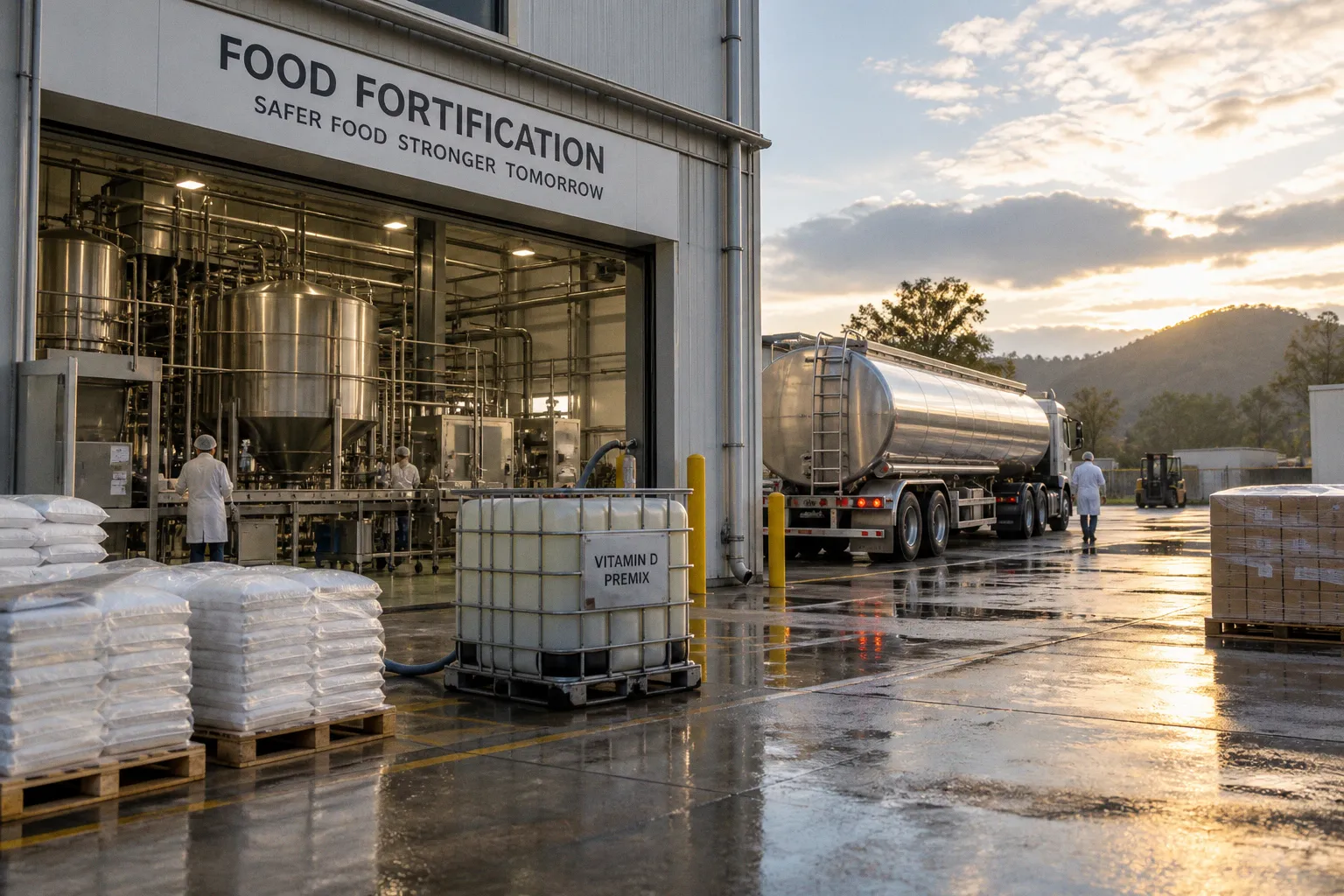
Vitamin D deficiency interventions that ignore matrix behavior will underperform at scale. That is the underlying message from a recent Medscape piece framing the problem as one requiring tailored approaches, and it aligns with a new chapter published by the Royal Society of Chemistry that dissects the physical and chemical constraints facing food fortification programs. For anyone specifying or auditing fortification protocols, the combined signal is clear: blanket supplementation strategies collapse under the realities of food processing.
The Degradation Problem
The RSC chapter catalogues the failure modes that degrade vitamin D during fortification: chemical, photochemical, and thermal degradation pathways each impose distinct losses depending on the food matrix. Processing and storage losses compound the issue. Matrix homogeneity remains a persistent production hurdle — uneven distribution means that even when the target addition rate is met on paper, the bioavailability yield per serving can vary significantly across a production batch.
These are not theoretical concerns. Extrusion, pasteurization, and extended shelf storage each interact differently with cholecalciferol and ergocalciferol. The chapter documents food-quality effects downstream of fortification — texture shifts, off-flavors, oxidation acceleration — that force formulators into trade-offs between therapeutic dose and organoleptic acceptance.
Nanoengineering and Controlled Release
The RSC review also examines nanoengineering approaches designed for controlled vitamin D release. Encapsulation technologies can shield the active compound through hostile processing steps and improve stability during storage. The chapter flags several open variables: regulatory frameworks have not kept pace with the material science, scalability from pilot to industrial production remains unproven for many carrier systems, and biocompatibility and safety data are incomplete for several nano-scale delivery formats.
For fortification policymakers, this means the technology exists in laboratory settings but has not cleared the full gauntlet of industrial validation and regulatory approval. Specifying nanoencapsulated vitamin D in a national fortification standard today would require accepting a significant evidence gap between bench-scale stability data and factory-floor reproducibility.
Systems-Level Gaps
The broader food safety environment adds friction. A Food Safety Forward session reported by Hiru News underscored the need for stronger food safety systems — a context that matters when fortification mandates are layered onto supply chains that already struggle with basic compliance and monitoring. Separately, a DongA Science report cited a Food Packaging Forum analysis flagging safety data gaps for over 13,000 food contact chemicals. If the packaging ecosystem surrounding fortified foods carries this level of characterization uncertainty, the interaction matrix between fortificants, packaging materials, and storage conditions grows harder to model.
The takeaway for practitioners: vitamin D fortification is not a single-variable problem. Matrix selection determines degradation rate. Processing parameters determine residual bioavailability. Regulatory and safety infrastructure determine whether a technically sound formulation survives scale-up. A tailored approach, as the Medscape framing suggests, means matching the intervention to the food system — not retrofitting a universal dose onto heterogeneous production realities.