The Shift to Plant-Based Protein Matrices in Sports Nutrition Formulation
A September 2026 market analysis published via Issuewire.com documents the shifting protein substrate landscape in sports nutrition, with emphasis on the displacement of whey by engineered plant protein premixes.
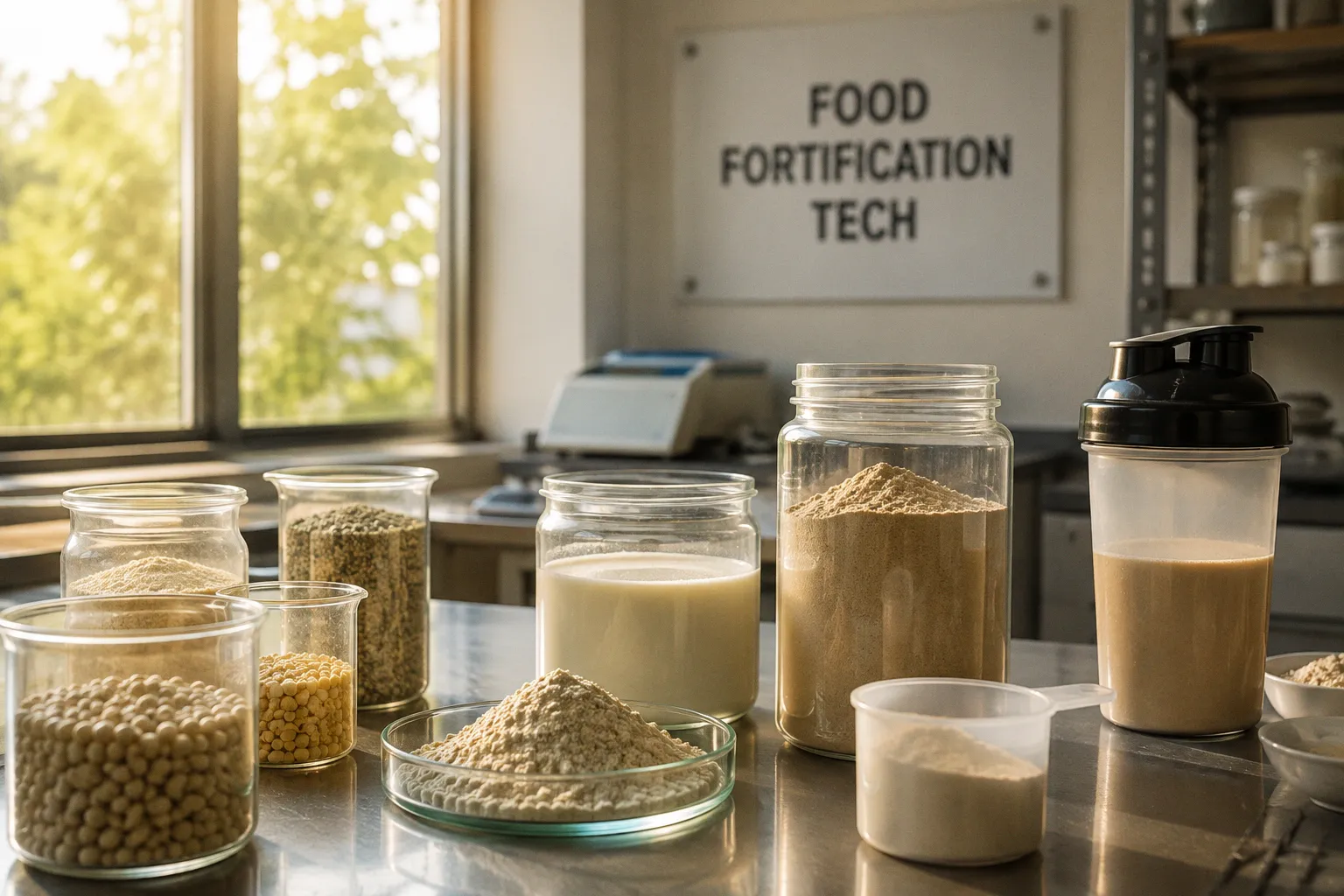
For fortification technology operators, the data point of immediate operational relevance is the reported five-fold rise in whey pricing since 2023, now driving reformulation cycles across high-protein product categories. The report frames plant protein premixes — pea and soy matrices supplemented by chickpea, fava bean, and mycoprotein — as the substitution vector through the early 2030s.
Substrate economics and matrix engineering
Whey protein retains benchmark status for bioavailability in sports applications, but the cost variable has become unworkable for volume manufacturing. The reported trajectory — whey prices rising approximately five-fold since 2023 — pushes manufacturers toward blend architectures rather than straight substitution. Tianjia's Vegeta® Plant Protein Premix adjusts the amino acid profile and the BCAA and leucine levels to deliver nutritional content equivalent to whey, indicating that matrix engineering, not ingredient substitution alone, is the operational lever. The technical problem shifts from sourcing logistics to formulation reconciliation.
Carrier compatibility in fortified formats
Plant-based protein systems now constitute the fastest-growing segment within sports protein, with market research cited in the report projecting a CAGR of approximately 9.21% through 2031. For fortification policy stakeholders, the unresolved question is whether plant protein matrices preserve the carrier performance that milk-derived proteins provided for fat-soluble micronutrient delivery in beverage and bar systems. The Issuewire source does not address fortificant compatibility, vitamin retention across processing, or encapsulation behavior within these novel matrices — the exact variables that determine whether a protein-format fortification program translates into measurable delivery efficiency.
Process parameters requiring quantification
The remaining technical gaps are extraction yield across chickpea and fava bean isolates, residual anti-nutritional factor loads in mycoprotein carriers, and thermal degradation behavior during extrusion-based bar production. Until these are quantified per matrix, the cost-driven pivot to plant proteins cannot be assumed to preserve the bioavailability yield that dairy-derived carriers historically provided. The market shift is documented. The process economics for fortified variants are not.