Vitamin D fortification: mandatory vs voluntary models
Walk into any supermarket from Toronto to Turku and you will find the same quiet architecture of public health at work: milk fortified with vitamin D, margarine carrying added cholecalciferol…
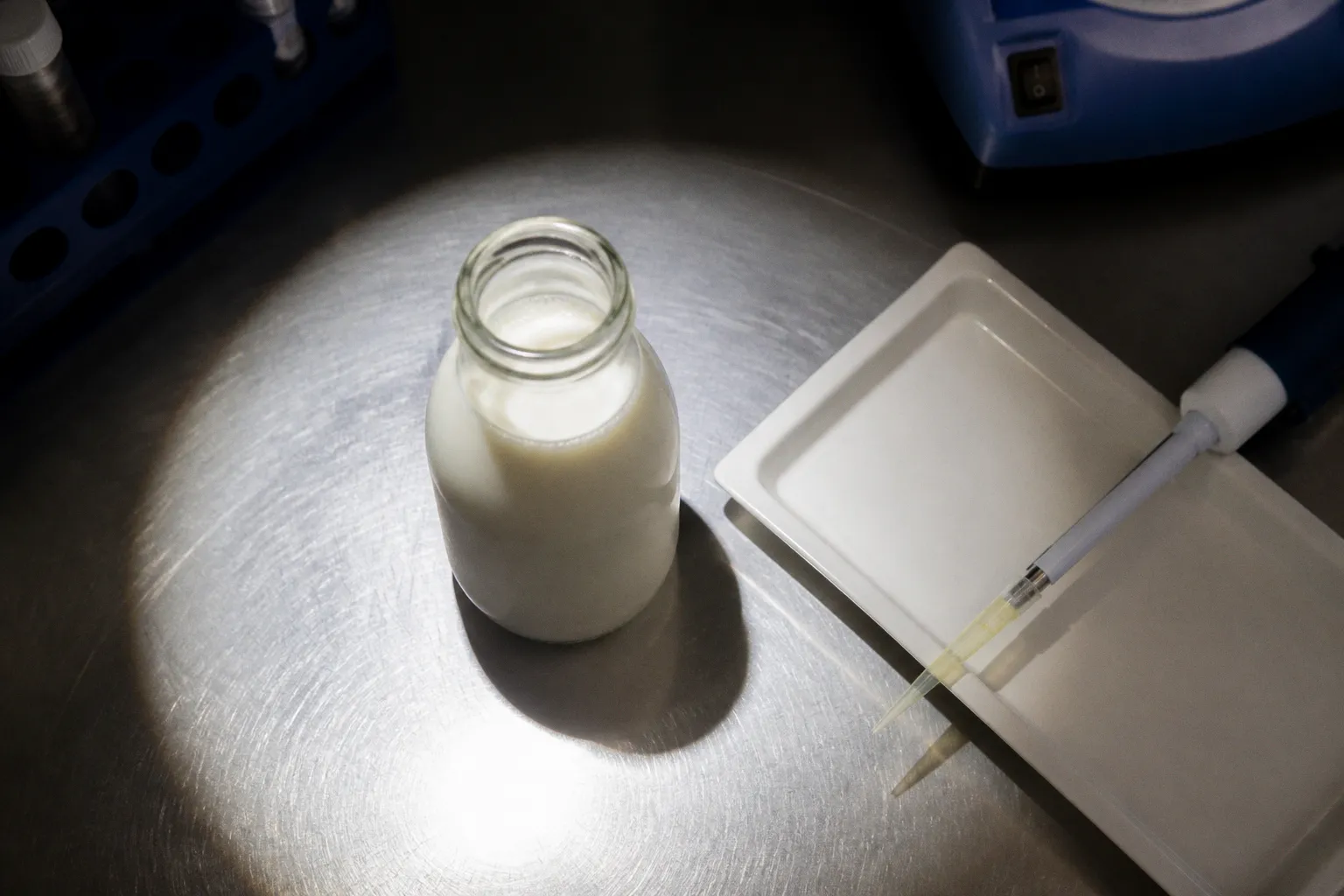
Walk into any supermarket from Toronto to Turku and you will find the same quiet architecture of public health at work: milk fortified with vitamin D, margarine carrying added cholecalciferol, breakfast cereals labelled with percentages of the daily reference intake. What most of us never see is the regulatory machinery that decided whether those nutrients ended up in our food by law or by industry choice, and that distinction — between mandatory and voluntary fortification — is one of the most consequential policy levers in modern nutrition. Across the OECD, an estimated one billion people still live with suboptimal vitamin D status, a figure that holds even in countries with mature food systems. Closing that gap requires more than clinical advice about supplementation; it requires governments to decide how the everyday food supply itself will carry the nutrient, and that decision is never politically neutral.
Defining the Regulatory Divide
At its core, the divide between mandatory and voluntary fortification is a question of who carries the responsibility for population-level nutrition: the state, through enforceable law, or the market, through commercial uptake within a permissive regulatory frame. The Global Fortification Data Exchange captures this neatly. Mandatory fortification exists when a country holds legal documentation requiring the addition of one or more nutrients to a specified food vehicle. Voluntary fortification, by contrast, sits inside a regulatory framework that permits the practice and may even guide it with recommended levels, but leaves the act of fortification to the discretion of food manufacturers.
In the European Union, that permissive default is codified in Regulation (EC) No 1925/2006, which establishes a common architecture for adding vitamins and minerals to foods but treats fortification as voluntary unless a member state invokes specific public health grounds to mandate it. This means the European landscape is not a single model but a patchwork: some countries lean entirely on voluntary mechanisms, others layer mandatory requirements onto specific staples, and the rationales vary as much as the dietary cultures do.
| Parameter | Mandatory Fortification | Voluntary Fortification |
|---|---|---|
| Legal basis | National regulation with binding force on specified foods | Permissive framework (e.g., EU 1925/2006) with non-binding recommended levels |
| Coverage guarantee | Industry-wide compliance by law; all listed products contain the nutrient | Depends on commercial uptake; varies by category and manufacturer |
| Equity profile | Strong nutritional equity across income and geography | Risk of "fortification deserts" where uptake is uneven |
| Speed of public health impact | Predictable, measurable at population scale | Variable; can be rapid if industry aligns with public campaigns |
| Industry burden | Reformulation mandates, compliance audits, reform deadlines | Lower regulatory friction, but reputational and market-driven incentives |
| Adaptability to new evidence | Slower; amendments require regulatory process | Faster; recommended levels can shift with national nutrition councils |
| Representative examples | Canada (milk, margarine), Australia (edible oil spreads) | Finland (dairy, spreads), most EU member states |
This table is not a verdict. Each column contains its own systemic barriers, its own evidence base, and its own historical compromises. The question is not which model is purer in principle but which one delivers measurable sufficiency at scale, and under what conditions.
The Mechanics of Mandatory Fortification: Lessons from Canada and Australia
When a government decides that vitamin D must appear in a staple food at a defined concentration, the policy becomes a kind of nutritional infrastructure — invisible but load-bearing. Canada offers one of the clearest contemporary examples of this approach in motion. In 2022, Health Canada published updated regulations that doubled the required amount of vitamin D added to cow's milk and margarine, with a full industry implementation deadline of December 31, 2025. The move was a direct response to national dietary survey data showing that even in a country with extensive voluntary fortification, intake from food alone was insufficient to push a sizeable share of the population across the 50 nmol/L serum 25(OH)D threshold considered adequate for bone and musculoskeletal health.
What is striking about the Canadian approach is not simply the mandate but the specificity of the vehicles. Milk and margarine were chosen because they are consumed across age groups, income brackets, and the country's distinct regional food cultures, including Indigenous and immigrant communities that have historically borne a disproportionate burden of deficiency. By targeting these vehicles, regulators attempted to engineer nutritional equity into the food supply itself rather than relying on individual supplementation, which tends to follow the inverse gradient of need: those most at risk are often the least likely to receive or adhere to clinical recommendations.
Australia has pursued a narrower but no less deliberate version of mandatory fortification through Standard 2.4.2 of the Food Standards Code, which requires the addition of vitamin D to edible oil spreads such as margarine. The vehicle choice reflects a long-standing public health logic: fat spreads are consumed broadly and serve as a reliable delivery mechanism for fat-soluble vitamins, particularly in populations whose dairy intake is constrained by lactose intolerance or cultural dietary patterns. Crucially, the Australian model did not stop at margarine; voluntary fortification of other products, including some dairy alternatives and breakfast cereals, continues to operate alongside the mandate.
Mandatory fortification works because it removes the question of whether a nutrient reaches the population and replaces it with the more manageable question of how much.
The strength of mandatory frameworks is also their constraint. Once a level is written into regulation, adjusting it requires a regulatory process that must navigate stakeholder consultation, impact assessments, and political timelines. This rigidity can be a feature when it protects populations from sudden industry retreat, but it can also slow the system's responsiveness when new evidence — say, about optimal thresholds in pregnancy or in darker-skinned populations living at high latitudes — calls for faster recalibration.
Success Through Consensus: The Finnish Voluntary Model
Finland is the case that complicates any simple hierarchy of mandatory over voluntary. Beginning in 2003, the Finnish Food Authority, working with the National Nutrition Council, began systematically recommending voluntary vitamin D fortification levels: 1 µg per 100 ml of liquid dairy products and 20 µg per 100 g of spreadable fats other than butter. By 2010, recommended levels for milk had been doubled to 1.0 µg per 100 ml, and food manufacturers broadly complied. Today, the country's daily recommended intake of 10 µg for children and adults is met for a large share of the population through fortified dairy and fat spreads, without any legal mandate compelling producers to add the nutrient.
What makes Finland instructive is the ecosystem in which voluntary fortification operates. It is not a free market in any simplistic sense; it is a coordinated public health campaign in which government agencies, dairy producers, and retailers operate with a shared sense of nutritional purpose. The Finnish approach is sometimes described as "guided voluntary fortification," and it depends on several enabling conditions: a relatively concentrated dairy industry willing to align with public health goals, a high baseline of consumer trust in fortified foods, and a regulatory architecture that sets clear targets without converting them into legal compulsion. In this environment, the systemic barriers to population coverage shrink not because the law enforces them but because the social contract around nutrition is unusually coherent.
Voluntary fortification can rival mandatory coverage when it is embedded in a coordinated national conversation about who deserves protection from deficiency.
This is not a model that exports easily. Countries with fragmented food industries, weaker public health communication infrastructure, or sharper commercial competition may find that voluntary uptake clusters in premium products and bypasses the communities most exposed to deficiency. The Finnish outcome tells us that the mechanism of delivery matters less than the alignment between regulators, producers, and the public they serve — but it does not tell us that voluntary fortification is universally sufficient.
When Voluntary Becomes Optional: The UK Experience
The British experience offers a useful counterpoint. Until 2013, the United Kingdom maintained a mandatory requirement that margarine be fortified with both vitamin D and vitamin A. That requirement was repealed as part of a broader regulatory reduction initiative, on the grounds that almost all fat spreads sold in the UK were already being fortified voluntarily by manufacturers who had little reason to discontinue the practice. On paper, the policy outcome appeared identical: the population continued to receive fortified spreads, the nutrient remained in the food supply, and the regulatory burden on industry shrank.
The episode is often cited as evidence that mandatory rules can be safely retired when voluntary uptake is already near universal. But it also illustrates the structural fragility of voluntary models in the absence of systematic tracking. Without the mandate, the UK had no centralized mechanism to detect if a major reformulation quietly dropped vitamin D from a leading brand, or if a new category of spread entered the market without the nutrient. The repeal traded legal certainty for market continuity, and for several years afterward, monitoring of population vitamin D status depended on the rolling National Diet and Nutrition Survey rather than on any industry-level reporting tied to a regulatory floor.
This matters for the broader debate because it highlights a quiet assumption embedded in many voluntary frameworks: that industry alignment today implies industry alignment tomorrow. When that assumption holds — as it largely has in the UK, where fortified spreads remain common — the absence of a mandate is largely invisible to consumers. When it breaks, whether through reformulation pressure, cost dynamics, or shifting consumer preferences, voluntary fortification offers no automatic safety net for populations that depend on fortified staples as their primary source of the nutrient.
Balancing Public Health Goals with Industry Compliance
The honest policy question is not whether mandatory or voluntary fortification is better in the abstract but under what conditions each model delivers nutritional equity without imposing unsustainable burdens on either regulators or producers. Mandatory fortification offers predictability: when Canada set its December 2025 deadline for the updated milk and margarine levels, every processor in the country knew what was required and when, and public health authorities could plan population-level surveillance around a known input. That predictability is itself a public good, because it allows the rest of the nutrition system — clinical guidelines, dietary surveys, supplementation programs — to align with a stable fortification floor.
Voluntary fortification, for its part, offers adaptability. The Finnish ability to raise recommended dairy levels from 0.5 to 1.0 µg per 100 ml within seven years, and to coordinate that shift with industry without a regulatory rewrite, demonstrates a kind of policy responsiveness that mandatory frameworks struggle to match. In a field where the science of optimal intake continues to evolve, particularly for pregnant women, infants, older adults, and populations with darker skin living at high latitudes, that adaptability has real value.
A growing body of public health thinking now points toward hybrid models as the most pragmatic path forward. In such models, voluntary fortification operates across a broad range of foods under permissive regulation, while mandatory requirements are reserved for the highest-leverage vehicles — staples consumed across demographic groups where deficiency is well documented and where individual supplementation has proven insufficient. This is broadly the architecture already emerging in parts of the EU, where Regulation 1925/2006 allows member states to invoke mandatory provisions selectively while permitting voluntary fortification elsewhere.
For practitioners working at the community level, the implications are concrete. When we counsel families about infant vitamin D supplementation, design school nutrition programs, or advocate for fortification in locally produced dairy alternatives, we are operating downstream of decisions that were made in ministerial offices years earlier. Understanding whether the milk on the shelf carries its vitamin D by law or by industry choice is not academic: it tells us where the safety net is thickest and where it depends on goodwill that may or may not last.
The path forward, in our view, is neither the rigid uniformity of a single global mandate nor the wishful assumption that markets will always do the right thing. It is the patient, evidence-based construction of fortification systems that match regulatory force to public health need — mandatory where coverage gaps persist and voluntary where genuine consensus holds — and that monitor both with equal seriousness. Nutritional equity does not emerge from a single policy instrument; it emerges from the alignment of law, industry, and community expectation around a shared definition of who deserves protection from deficiency, and why.