Voluntary vs mandatory vitamin D fortification: two policy paths
Vitamin D deficiency is rarely distributed evenly across a population. It follows the lines of geography, skin pigmentation, age, income, housing, occupation, dietary pattern, and access to health…
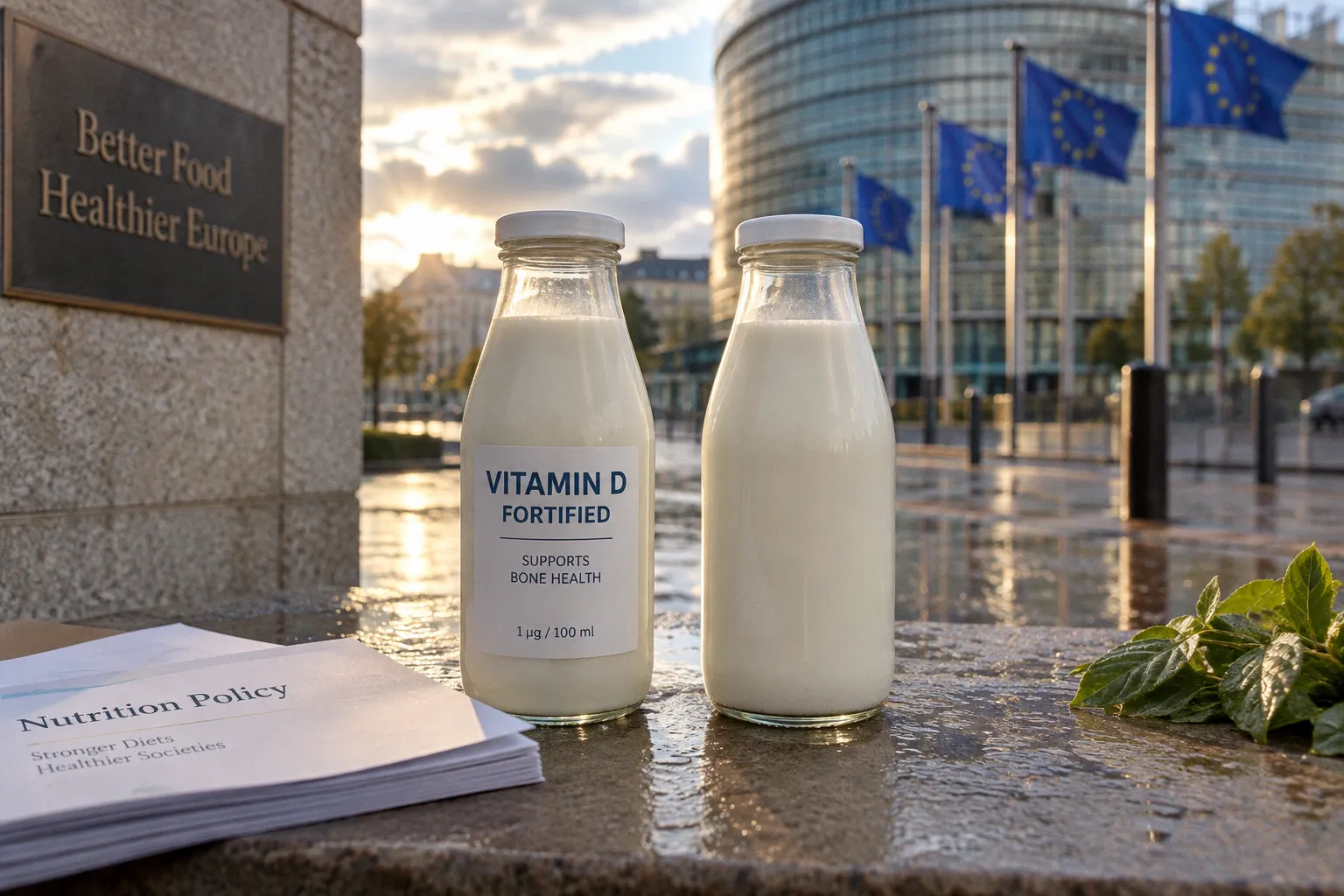
Vitamin D deficiency is rarely distributed evenly across a population. It follows the lines of geography, skin pigmentation, age, income, housing, occupation, dietary pattern, and access to health services—then becomes harder to address when a national policy assumes that people will encounter fortified foods in the same way. This is the central difficulty behind the voluntary vs mandatory vitamin D fortification policy debate: both models can increase vitamin D intake, but they do so through very different routes and with very different expectations about population coverage.
A voluntary system asks manufacturers to act within a national framework, usually by following recommended fortification levels and applying the same approach across a category of foods. A mandatory system creates a legal obligation for specified producers and specified food vehicles. The distinction sounds straightforward, but its public health consequences depend on what is fortified, how consistently the industry participates, whether the products are affordable and widely available, and how regulators monitor total intake.
We should therefore resist the easy conclusion that one model is universally superior. Voluntary fortification can be responsive and practical when public authorities, manufacturers, retailers, and health professionals are aligned. Mandatory fortification can provide a more dependable nutritional floor, but it also requires careful design, enforcement, labeling, and safety surveillance. The policy route matters, but the surrounding system matters just as much.
Regulatory frameworks: where permission ends and obligation begins
Across the European Union, the starting point is generally permissive rather than prescriptive. Regulation (EC) No 1925/2006 establishes the framework for adding vitamins and minerals to foods, but it does not create a single EU-wide requirement that all member states must fortify foods with vitamin D. Member states may develop national policies, including mandatory measures for public health reasons, while many countries continue to rely on voluntary industry action.
That arrangement produces a fragmented policy landscape. The same product category may carry meaningful vitamin D fortification in one country, limited fortification in another, and no routine fortification in a third. For researchers, this creates a valuable opportunity to compare policy environments, but for populations it can mean that nutritional protection depends on national food markets that are not organized around a common standard.
The difference between the two models is best understood through the obligations placed on the food industry:
| Policy feature | Voluntary fortification | Mandatory fortification |
|---|---|---|
| Legal duty | Manufacturers are permitted or encouraged to fortify but are not universally required to do so | Producers of specified foods must add vitamin D at legally defined levels |
| Population coverage | Depends on industry participation, product availability, price, and consumer choice | More predictable within the targeted food categories |
| Policy flexibility | Easier to adjust recommendations as evidence, formulations, or consumer preferences change | Changes usually require formal regulatory review and implementation |
| Main equity concern | People who buy fewer fortified products may receive little benefit | People who do not consume the selected food vehicle may remain outside the policy’s reach |
| Monitoring need | Requires oversight of participation, nutrient levels, labeling, and market consistency | Requires compliance enforcement as well as intake and safety surveillance |
| Typical strength | Can build broad industry alignment without immediate legal compulsion | Creates a clearer population-level nutritional baseline |
| Typical weakness | Coverage may vary substantially between brands, products, and regions | A poorly chosen vehicle can make a national mandate less relevant to some groups |
This is why a vitamin D food fortification regulatory framework cannot be judged only by whether it is labeled mandatory or voluntary. The operative questions are more specific: which foods carry the nutrient, at what concentration, for whom those foods are accessible, and how the system detects gaps.
A policy that reaches a large share of the population through affordable staple foods may be more equitable than one that technically covers every manufacturer but relies on products consumed mainly by higher-income households. Conversely, a voluntary model can look successful at the national level while leaving specific communities with low exposure because the products they purchase, prepare, or can afford are not consistently fortified.
A fortification policy is not population-wide merely because fortified products exist; it becomes population-wide only when people can reliably encounter and afford them.
The Finnish model: voluntary alignment with a public health purpose
Finland is one of the clearest examples of a voluntary strategy supported by strong national coordination. The National Nutrition Council recommends vitamin D3 fortification of liquid milk products at 1 microgram per 100 millilitres and fat spreads at 20 micrograms per 100 grams. Food manufacturers widely follow these recommendations, which gives the policy a practical reach well beyond what the word voluntary might suggest.
The Finnish experience is important because it demonstrates that voluntary implementation does not necessarily mean a loose or unstructured marketplace. A voluntary policy can function as a coordinated public health intervention when several conditions are present:
- The recommended food vehicles are familiar and regularly consumed across much of the population.
- Fortification levels are specific enough for manufacturers to apply consistently.
- Public authorities communicate a clear nutritional rationale.
- Industry participation is broad rather than limited to a few leading brands.
- The policy sits within a wider nutrition system that includes dietary guidance, surveillance, and professional awareness.
This is grassroots implementation at a national scale: the policy is translated through ordinary shopping and eating patterns rather than delivered only through clinics or targeted supplementation programs. That matters for people who may not have regular contact with healthcare services, and it can reduce the administrative burden associated with identifying every individual at risk.
Yet the Finnish model should not be copied as though its success were automatic. Voluntary fortification challenges in nutrition policy begin with the assumption that all manufacturers will see the same public health incentive. They may not. Companies differ in product portfolios, technical capacity, cost structures, labeling strategies, and interpretations of consumer demand. A recommendation can be widely adopted in one national market and remain uneven in another.
The Finnish case also shows why the choice of food vehicle is more consequential than the policy label. Liquid milk products and fat spreads are not interchangeable from an equity perspective. Some people avoid dairy products, follow vegan diets, have lactose intolerance, or rely on culturally specific foods that sit outside the most commonly fortified categories. Others may reduce their consumption of spreads for dietary reasons. A program can achieve strong overall participation while still leaving particular population groups with limited exposure.
Finland’s dietary reference point is also relevant to interpretation. Finnish guidance has considered a serum 25-hydroxyvitamin D concentration of 50 nanomoles per litre sufficient for health, while national recommendations have supported a daily vitamin D intake of 10 micrograms, or 400 international units, for the UK population aged four and over. These figures belong to different national policy contexts and should not be treated as a universal formula. They illustrate how fortification decisions are built around reference values, population assumptions, and safety considerations rather than a single global target.
Mandatory fortification: the strength of a legal floor
Mandatory fortification changes the policy question from whether manufacturers will participate to whether regulators have selected the right product categories, nutrient levels, and enforcement mechanisms. Canada provides a well-established example: section B.08.005 of the Food and Drug Regulations requires the addition of vitamin D and vitamin A to specific standardized dairy products, including skim milk and partly skimmed milk.
The public health logic is straightforward. If a defined food vehicle is widely consumed and can be fortified in a technically consistent way, a legal requirement can make vitamin D exposure more predictable across brands. It also prevents a situation in which consumers must compare labels or identify which manufacturers have followed a voluntary recommendation. For populations with limited time, limited nutrition literacy, or limited access to dietetic advice, this reduction in decision-making can be valuable.
Mandatory fortification is not, however, the same as universal protection. It covers the foods named in the law, not every food consumed by every resident. People who do not consume standardized dairy products may receive little or no vitamin D through that route. The same issue arises in European countries where mandatory policies apply to selected vehicles.
Examples include Sweden, where mandatory fortification has been applied to categories such as low-fat milk, fermented dairy products, plant-based beverages, and fat spreads. Belgium has mandatory fortification levels for margarines and spreadable fats in the range of 6 to 7.5 micrograms per 100 grams. Poland also requires fortification of certain margarines and fat spreads. These approaches demonstrate that mandatory fortification in Europe exists, but remains limited to a small number of countries and food vehicles rather than forming a universal European standard.
The choice of vehicle is therefore a political and epidemiological decision, not merely a technical one. Policymakers must ask:
1. Is the food consumed frequently enough to deliver a meaningful contribution?
2. Is consumption distributed across income groups, ages, regions, and cultural communities?
3. Can the nutrient be added without compromising product quality or safety?
4. Will fortification create an unintended assumption that supplementation or clinical assessment is no longer needed?
5. Can the food be identified clearly through labeling and monitored through routine regulation?
The impact of mandatory fortification on population health depends on the answers. A mandate can raise the nutritional baseline efficiently, but it cannot compensate for a poorly chosen food vehicle or for wider systemic barriers that shape what people can buy and eat.
Population coverage is a distribution problem, not just an average intake problem
National nutrition policy often reports population averages because averages are useful for identifying broad trends. But averages can conceal precisely the communities that public health policy is meant to protect. A national increase in vitamin D intake may coexist with persistent deficiency among people who consume few fortified products, spend little time outdoors, have limited dietary variety, or experience barriers to healthcare and supplementation.
This is where nutritional equity becomes a practical design test. We need to look beyond the average amount of vitamin D added to the food supply and ask how that addition travels through the population.
A voluntary system may perform well when manufacturers fortify a broad range of popular products and when those products remain affordable. It may perform less well when participation is concentrated among premium brands, when fortified alternatives carry a higher price, or when labeling makes the difference between products difficult to see. Compliance rates under purely voluntary national guidelines cannot be assumed without evidence, and the presence of recommendations does not guarantee consistent market behavior.
A mandatory system may provide stronger protection within a selected category, but the same policy can miss communities whose diets differ from the national norm. Plant-based beverages, for example, may be included in one country’s mandate and excluded in another. If a population is moving away from dairy consumption, a dairy-centered policy may gradually lose reach unless regulation evolves with dietary behavior.
This is why implementation pathways should be evaluated using several forms of evidence rather than a single serum measurement or sales figure:
- Market coverage: Which brands and product types are fortified, and how stable is that coverage over time?
- Consumption patterns: Are the targeted foods eaten by children, older adults, lower-income households, and culturally diverse communities?
- Nutrient contribution: Does fortification materially improve intake, or does it add only a small amount to diets that remain insufficient?
- Geographic access: Are fortified products available in rural areas, remote communities, and smaller retail outlets?
- Affordability: Does the policy reach households facing food insecurity, or does it primarily benefit those with greater purchasing power?
- Substitution effects: Do consumers switch from fortified products to unfortified alternatives because of price, taste, dietary preference, or marketing?
- Health outcomes: Are changes visible in dietary intake, serum 25-hydroxyvitamin D status, or deficiency prevalence among priority groups?
These measures also help us avoid treating fortification as a substitute for other public health interventions. Vitamin D policy may need to sit alongside supplementation guidance, clinical care, advice for high-risk groups, and broader measures addressing food access. Fortification is a population strategy; it is not a complete response to every clinical or social determinant of deficiency.
The UK debate: moving from evidence review to policy design
The United Kingdom illustrates how a voluntary system can enter a more formal period of policy reassessment. The Scientific Advisory Committee on Nutrition established a fortification working group to examine the potential public health impact of mandatory vitamin D food fortification. SACN’s 2016 report set a recommended daily intake of 10 micrograms, or 400 international units, for the population aged four and over. A review was launched by the Department of Health and Social Care in 2022, and SACN published its main report on fortifying foods and drinks with vitamin D in May 2024.
The significance of this process lies not only in the eventual policy decision, but in the questions that a serious review must answer. A mandate cannot be justified solely by the biological importance of vitamin D. It must be assessed against dietary behavior, existing intake, the distribution of deficiency, food technology, regulatory capacity, and the possibility of excessive intake when fortified foods are combined with supplements.
The UK discussion also reflects a broader shift in public health nutrition. Policymakers increasingly recognize that advice to individuals has limited reach when the food environment is working in the opposite direction. Asking every person to identify risk, select a supplement, understand dosage, remember daily use, and absorb the cost places the burden on individuals, even when the deficiency pattern is shaped by structural conditions. Food fortification can redistribute part of that responsibility toward the food system.
But shifting responsibility toward the food system does not remove the need for precision. A mandatory policy may improve nutritional equity if it uses affordable and widely consumed foods; it may widen inequities if compliance costs increase prices or if the chosen products are not culturally or economically accessible. This is the point at which epidemiology, regulation, consumer behavior, and industry operations have to meet.
Safety limits should shape the policy, not appear as an afterthought
Vitamin D fortification is often discussed as though the only policy risk were insufficient intake. That is incomplete. Fortified foods may be consumed alongside supplements, naturally vitamin D-containing foods, and other fortified products. Any national strategy therefore has to consider total exposure across the diet and ensure that proposed levels remain within tolerable upper intake limits established by authoritative bodies such as the European Food Safety Authority.
This does not mean that fortification is inherently dangerous. It means that dosage, food vehicles, age groups, labeling, and monitoring must be designed together. A policy that adds modest amounts to commonly consumed foods may have a different safety profile from one that concentrates vitamin D in multiple products consumed by the same households.
The main safeguards include:
- Defining fortification levels with reference to dietary intake data rather than relying only on theoretical consumption.
- Modeling exposure across age groups and high-consumption scenarios.
- Monitoring the combined contribution of fortified foods and supplements.
- Reviewing labels so consumers and healthcare professionals can identify sources clearly.
- Updating the policy when dietary patterns, product formulations, or scientific assessments change.
- Maintaining clinical guidance for people with diagnosed deficiency or conditions requiring individualized treatment.
The balance is especially important because public health recommendations usually aim to reduce deficiency across a population, while clinical treatment may involve different doses and medical supervision. Confusing those two purposes can lead either to under-treatment of patients or overconfidence in a population policy.
A voluntary model may offer an advantage here because recommendations can be adjusted comparatively quickly when new evidence emerges, although rapid adjustment is not guaranteed. A mandatory model may offer stronger consistency, but regulatory changes can take more time and require consultation, enforcement planning, and industry transition. Neither flexibility nor consistency is sufficient on its own; the public health system needs both.
Which policy path is more effective?
The most honest answer is conditional. Mandatory fortification is likely to provide more reliable coverage within clearly defined food categories, especially where the products are widely consumed and regulatory enforcement is strong. Voluntary fortification can achieve substantial reach when industry alignment is broad, the recommended levels are clear, and public authorities maintain credible oversight.
The comparison becomes more useful when we separate four questions that are often collapsed into one:
Which model reaches more people?
Mandatory fortification has an institutional advantage because participation is not left entirely to manufacturer choice. Yet reach still depends on food consumption. A legal mandate for a product category does not reach people who avoid or cannot afford that category.
Which model is easier to adapt?
Voluntary guidance can usually be revised without rewriting a regulation, although manufacturers may not respond uniformly. Mandatory policies provide a stable standard but may require a more formal revision process when evidence or consumption patterns change.
Which model is more equitable?
Neither model guarantees nutritional equity. Voluntary systems may reproduce commercial inequalities if fortified foods are less available or more expensive in underserved areas. Mandatory systems may reproduce cultural or dietary exclusions if they focus too narrowly on one food vehicle.
Which model is safer?
Both can be safe when fortification levels are evidence-based and exposure is monitored. Both can become problematic when policymakers fail to account for supplements, multiple fortified products, or vulnerable groups. Safety is a function of design and surveillance, not simply of whether the policy is voluntary or mandatory.
The strongest strategy may not be a choice between permission and compulsion, but a managed system that combines broad participation, enforceable standards, and continuous population monitoring.
Designing a stronger micronutrient policy implementation pathway
For countries deciding between these models, the next step should not be to import Finland’s approach or Canada’s legal structure without adaptation. The useful lesson is methodological: begin with the population, then work backward to the food vehicle and the regulatory instrument.
A practical policy sequence would include:
1. Map deficiency and intake by subgroup. National averages should be disaggregated by age, sex, geography, socioeconomic position, skin pigmentation where relevant to risk, dietary pattern, and access to supplementation.
2. Identify the foods that actually organize household diets. The most technically convenient vehicle is not necessarily the most equitable one.
3. Test voluntary alignment before assuming it. Authorities should measure participation, nutrient levels, product availability, and price rather than infer compliance from industry statements.
4. Set explicit fortification levels and safety boundaries. Manufacturers, laboratories, clinicians, and consumers need a stable reference point.
5. Build labeling and enforcement into the policy from the beginning. Monitoring cannot be added after implementation as a purely administrative exercise.
6. Evaluate coverage, not only production. The number of fortified products on the market says less than the proportion of priority groups that regularly consume them.
7. Create a review mechanism. A policy should have a defined route for adjustment as diets, scientific opinions, and food markets change.
This approach also leaves room for hybrid models. Governments may encourage voluntary fortification across a broad market while mandating vitamin D addition in selected staple foods where deficiency risk and consumption patterns justify a legal requirement. They may combine fortified foods with targeted supplementation for groups that remain outside the reach of the food supply. The exact arrangement should follow evidence rather than ideological preference for either regulation or industry discretion.
The decision is ultimately about who carries the burden
Voluntary and mandatory fortification are often presented as competing models of governance, but they also represent different distributions of responsibility. In a voluntary system, some of the burden remains with manufacturers to participate and with consumers to identify and purchase fortified products. In a mandatory system, more responsibility moves to regulators and producers, who must define, implement, and monitor a common standard.
Neither distribution is neutral. When deficiency is concentrated among communities facing systemic barriers, a policy that relies heavily on individual choice may leave the people at greatest risk with the least protection. At the same time, a universal mandate that ignores food diversity, cost, safety limits, or industry feasibility may produce a technically consistent but socially incomplete intervention.
Our task in public health is not to choose the most elegant policy label. It is to build a vitamin D strategy that is measurable, affordable, culturally relevant, and capable of reaching people who are least well served by ordinary market behavior. That may require voluntary industry alignment in some categories, mandatory standards in others, and targeted supplementation where neither model can close the gap.
The next stage of vitamin D policy should therefore focus on systemic adjustment: stronger population surveillance, clearer fortification standards, transparent monitoring of industry participation, and deliberate attention to the communities that national averages conceal. A fortification program succeeds not when the regulation is published or the product is reformulated, but when the nutritional benefit travels reliably through the food system and reaches the people for whom the policy was designed.