Scaling Vitamin D Fortification: VIT A+ Technology Moves to Industrial Production
According to PR Newswire, Particles for Humanity and Hexagon Nutrition have validated the commercial-scale manufacturing transfer of VIT A+, a delivery technology designed to stabilize fat-soluble…
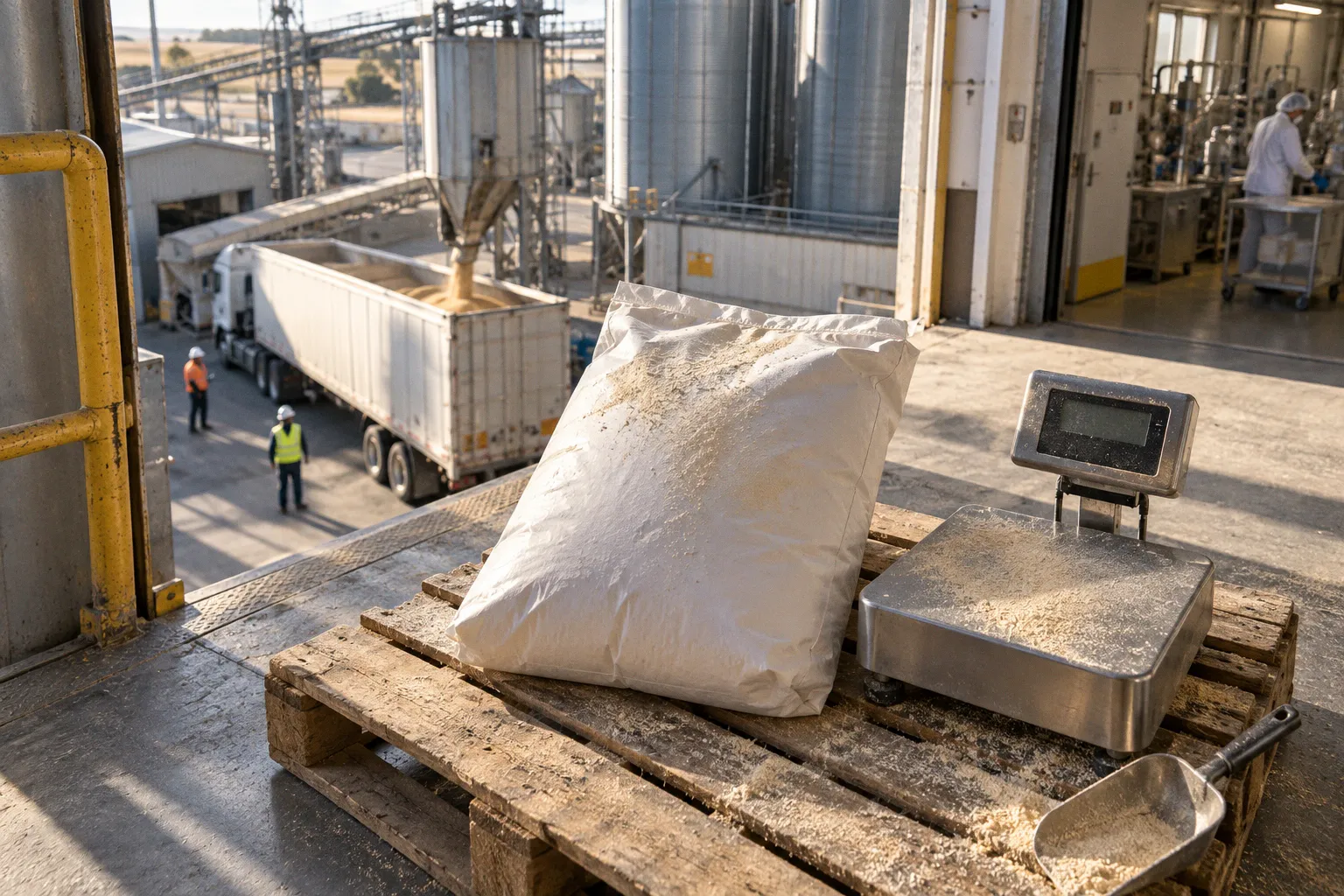
According to PR Newswire, Particles for Humanity and Hexagon Nutrition have validated the commercial-scale manufacturing transfer of VIT A+, a delivery technology designed to stabilize fat-soluble vitamins against the oxidative degradation that compromises them in food fortification matrices. The milestone confirms that the encapsulation system developed at laboratory scale reproduces at industrial throughput without losing core stability specifications. For fortification programs targeting fat-soluble micronutrients, the announcement closes the gap between bench-scale proof-of-concept and plant-floor reproducibility.
Process constraints and stability targets
VIT A+ addresses a defined production failure mode: oxidation of fat-soluble vitamins during extrusion, high-temperature blending, and extended shelf storage. Per the PR Newswire release, the technology is engineered to stabilize fat-soluble vitamins as a class — the same compound category relevant to vitamin D fortification across flour, milk powder, and oil carrier vehicles. Particles for Humanity and Hexagon Nutrition confirmed that the commercial-scale transfer holds the encapsulation behavior — matrix integrity, particle size distribution, and oxidative stability — observed in earlier development work. No specific degradation percentages or shelf-life figures appear in the announcement.
The manufacturing transfer step is the critical filter. Encapsulation matrices that perform in a bench reactor frequently lose their protective function when shear rates, residence times, and drying profiles shift at commercial scale. A validated transfer means the two parties have demonstrated that active ingredient loading and release profile hold within specification across a production lot of relevant size.
What to track in the supply chain
Three checkpoints follow this announcement for fortification program planners. First: bioavailability yield under actual processing conditions — the encapsulated product must remain intact when blended at industrial mixer speeds and exposed to moisture migration in finished product. Second: regulatory clearance for the specific carriers used in staple-food vehicles. Third: cost per stabilized dose at commercial volumes, which determines whether national programs can absorb the technology into existing procurement budgets.
Separately, Nutritional Outlook reports that International Vitamin Corporation will present its manufacturing and innovation capabilities at SupplySide Global 2026. Readers tracking fat-soluble nutrient stabilization should monitor that venue for complementary disclosures on scale-up data and contract manufacturing capacity.