Gene-Edited Sunshine Tomatoes: A New Plant-Based Source of Vitamin D3
According to Seed World, the gene-edited 'Sunshine' tomato developed at the John Innes Centre has cleared its first precision-bred organism marketing notice in England.
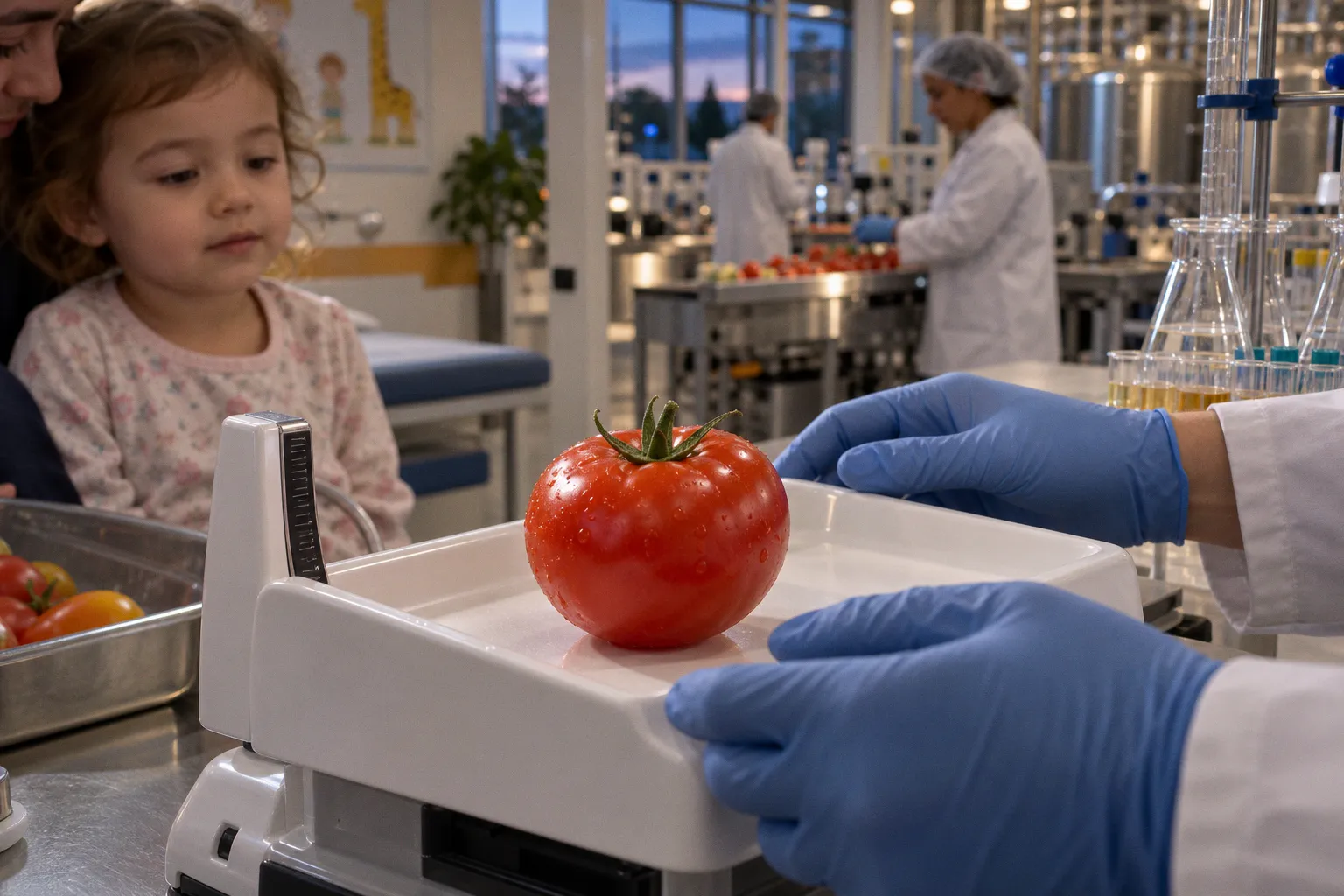
The regulatory milestone advances a biofortified crop engineered to accumulate pro-vitamin D3 at elevated concentrations in fruit and leaf tissue, positioning the fruit as a plant-based delivery vector for vitamin D3 precursors in populations with documented dietary insufficiency.
Process Mechanics
Tomatoes natively synthesize 7-dehydrocholesterol as a sterol pathway intermediate before routing it toward defense-related metabolites. The John Innes Centre team, led by Professor Cathie Martin FRS, applied targeted gene editing to suppress downstream enzymatic conversion. Pro-vitamin D3 therefore accumulates in the fruit and leaves without measurable changes to plant morphology, growth rate, or agronomic yield. Subsequent exposure to sunlight or controlled UVB light triggers photoisomerization, converting the retained precursor into vitamin D3, a thermally and metabolically stable form usable by human physiology.
The Centre reports a per-fruit payload equivalent to two eggs or 28 grams of tuna in vitamin D3 terms. That figure frames the crop as a meaningful intervention vector, particularly where access to animal-derived D3 sources remains constrained by geography, cost, or dietary restriction.
Regulatory Status and Bioavailability Pipeline
The PBO notice represents the first such approval for any John Innes Centre crop under England's precision-bred framework. The fruit has also entered a Quadram Institute study examining in vivo conversion efficiency. Prof Martin stated: "I am passionate about science supporting public health, and with vitamin D deficiency a widespread problem, our biofortified tomato could one day be a low-cost, simple, plant-based solution that can improve diets across the world."
Market authorization still requires a Food Standards Agency application. Until that filing clears, the line remains pre-commercial. Parallel breeding work crosses the biofortified parent with sweeter-tasting and striped varieties intended for retail distribution under the 'Sunshine' brand designation.
Production Constraints to Monitor
Three variables govern scalability:
1. UV activation dependency. The retained precursor requires sunlight or UVB exposure post-harvest to convert into active D3. Production in low-UV geographies or fully enclosed greenhouse systems will demand controlled irradiation protocols to preserve label-claim equivalence.
2. Matrix stability. Pro-vitamin D3 and post-conversion D3 degrade under thermal stress, oxidative exposure, and extended storage. Processing specifications for juice, paste, or dehydrated formats must be defined to protect yield through the supply chain.
3. Bioavailability yield. The Quadram Institute dataset will establish in vivo conversion rates. Until peer-reviewed absorption figures publish, the eggs-and-tuna equivalence remains a projected benchmark rather than a confirmed metabolic outcome.
Cost-benefit summary: the line introduces a novel plant-based D3 pathway with minimal agronomic overhead. Commercial viability depends on UVB activation infrastructure, processing stability parameters, and the pending FSA authorization window.