National vitamin D fortification: pre-policy feasibility checklist
Across Europe, the numbers tell a stubborn story: roughly 13.0% of the general population still falls below the 30 nmol/L threshold that defines vitamin D deficiency, and close to 40.4% sit beneath…
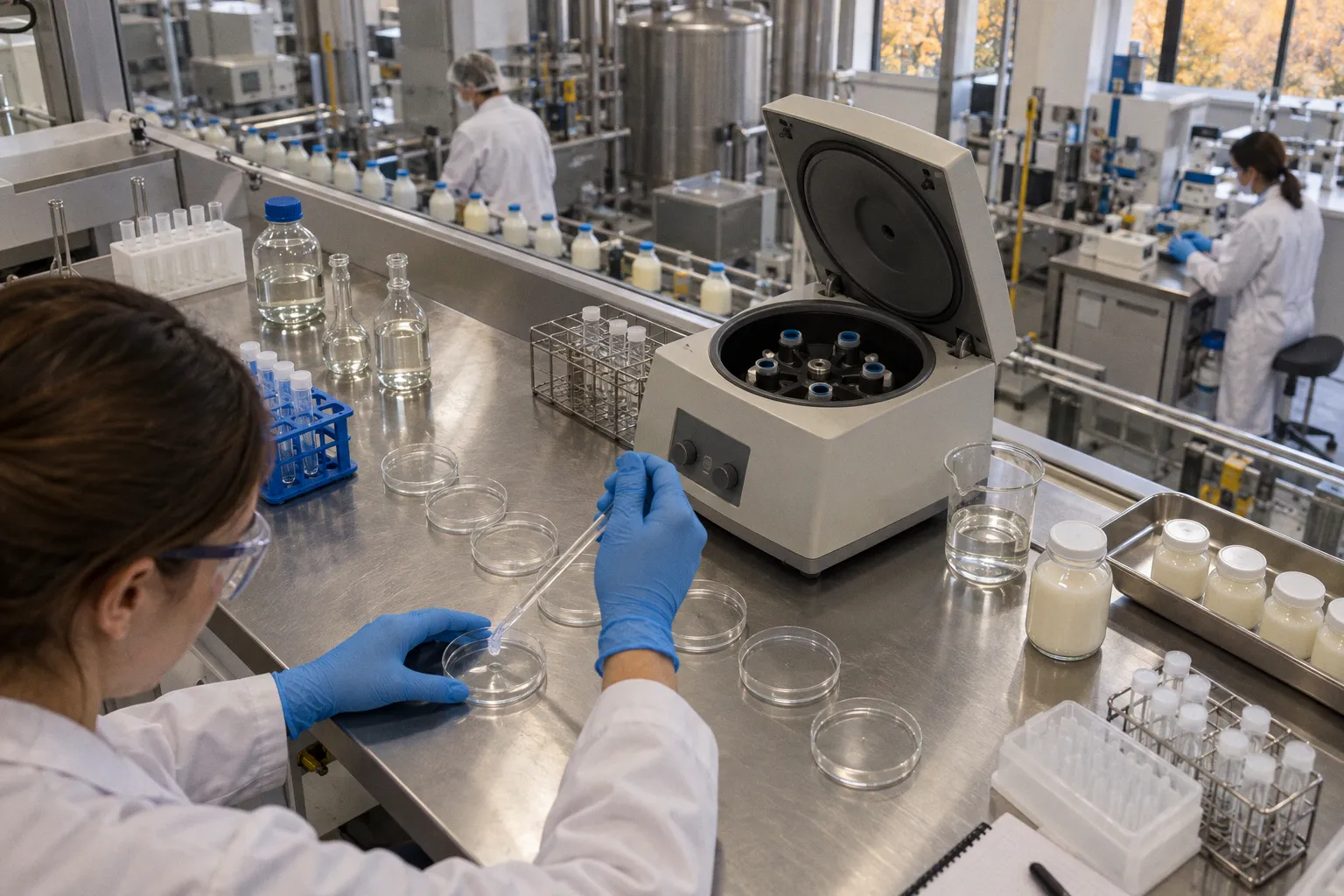
Across Europe, the numbers tell a stubborn story: roughly 13.0% of the general population still falls below the 30 nmol/L threshold that defines vitamin D deficiency, and close to 40.4% sit beneath the 50 nmol/L mark widely accepted as the floor for population sufficiency. These are not edge cases. They represent a continent-sized cohort whose bone health, immune function, and seasonal well-being may be affected by a deficiency that public policy could plausibly reduce.
Yet mandatory vitamin D fortification in Europe remains a patchwork. Finland adds vitamin D to homogenized skim milk; Sweden includes low-fat milk, fermented dairy products, plant-based alternatives, and fat spreads; Belgium focuses on margarine and selected fats; Poland uses margarine and fat spreads. Most other nations rely primarily on voluntary fortification. The result is a geographic and commercial lottery: protection depends on where people live, what they eat, what products manufacturers choose to fortify, and whether consumers have the income and health literacy to seek them out.
For governments considering a national vitamin D fortification policy feasibility assessment, the temptation is to begin with the mandate itself. We have seen this approach falter. The mandate is the destination, not the departure point. The feasibility work that precedes it is where a policy either gains traction or quietly loses its way.
That work has several connected parts: establishing a credible population baseline, choosing food vehicles that people actually consume, setting a regulatory and safety framework, checking whether industry can deliver the intervention consistently, and bringing the necessary stakeholders into the design before the difficult decisions have already been made.
Baseline population data and serum thresholds
The first question is not what should be fortified, but what is happening in the population right now. Without that grounding, every downstream decision becomes guesswork dressed in technical language.
A useful baseline normally combines national dietary surveys, biomarker studies based on representative population samples, and, where available, longitudinal data that captures seasonal variation. Vitamin D status in northern latitudes is not a flat line. It rises and falls with sunlight exposure, latitude, clothing patterns, indoor time, age, and seasonal behavior. A feasibility model that ignores this oscillation will systematically misestimate the size of the gap and may confuse a short seasonal decline with a stable population pattern.
The sampling frame matters as much as the laboratory result. A national average can conceal substantial differences between population groups. Depending on the country, the baseline may need to distinguish:
- children and adolescents, whose food consumption patterns differ sharply from those of adults;
- pregnant women and infants, for whom supplementation practices and clinical guidance may already be distinct;
- older adults, especially people living in residential or long-term care;
- people with limited outdoor exposure;
- populations with darker skin pigmentation living at higher latitudes;
- people whose diets contain little fish, dairy, or other naturally occurring sources of vitamin D;
- regular users of vitamin D supplements, whose intake may change the safety calculation even if their food consumption is typical.
The threshold decisions matter because they anchor the entire policy discussion. Two reference points are commonly used in European population models: 30 nmol/L (12 ng/mL), generally treated as a deficiency threshold, and 50 nmol/L (20 ng/mL), often used as a population sufficiency floor. These are not interchangeable policy objectives.
A country aiming to prevent severe deficiency is designing a different intervention from one aiming to move most of the population above the sufficiency threshold throughout the year. The second objective may require greater exposure, broader vehicle coverage, or additional targeted measures. It also demands a more explicit cost-benefit and safety justification.
We have learned to make this distinction early. Public health documents often move between the words deficiency and insufficiency as if they describe the same problem. They do not necessarily imply the same intervention. If the policy objective is left vague, ministries, clinicians, manufacturers, and advocacy groups can spend years arguing about the dose while using different definitions of success.
What the baseline must be able to answer
A baseline should do more than produce a national percentage. It should support the decisions that follow. At minimum, the feasibility team needs a clear view of:
- serum 25(OH)D concentrations by age, sex, region, season, and other relevant demographic variables;
- the proportion of people below each policy threshold, with uncertainty around the estimate;
- dietary vitamin D intake from food, supplements, and fortified products;
- consumption frequency and serving size for candidate food vehicles;
- existing voluntary fortification, including the products and brands that already contribute to intake;
- supplement use across the population, particularly among groups likely to consume the fortified vehicle frequently;
- seasonal differences in both biomarker status and food consumption;
- laboratory methods, calibration procedures, and comparability between survey waves.
Consumption data is especially important. A food can be technically suitable and still be a poor policy vehicle if the people at greatest risk rarely consume it. Conversely, a vehicle with modest vitamin D content may be highly effective if it is consumed frequently and consistently across the population.
A fortification policy without baseline serum data is designed to be evaluated against itself rather than against the deficiency it was meant to address.
One practical point deserves emphasis: biomarker assays are not interchangeable across laboratories. Where feasible, national programs should use external quality assurance schemes such as the Vitamin D External Quality Assessment Scheme, or DEQAS. Decisions about how widespread deficiency is should not hinge on calibration drift in a single laboratory’s immunoassay.
This is unglamorous infrastructure work, and it is exactly the kind of work that gets cut when budgets tighten. That is why it belongs in the feasibility phase rather than being treated as an evaluation detail after the policy has launched.
Selecting optimal food vehicles and delivery matrices
Once the population baseline is understood, the question becomes where to put the vitamin D. This is where policy design meets industrial reality, and where the language of fortification often runs ahead of the physics of food matrices.
Candidate vehicles may include fluid milk and other dairy products, edible oils and fats, fat spreads, breakfast cereals, and plant-based dairy alternatives. Each has a different reach, a different stability profile, and a different set of technical constraints. The added vitamin must survive processing, distribution, retail display, and household storage in a form that remains available to the consumer.
The stability question is not a footnote. Vitamin D3, or cholecalciferol, is commonly preferred because evidence indicates that it raises serum 25(OH)D more effectively than vitamin D2 in many supplementation and food-fortification contexts. But the choice of D3 does not remove the need for a matrix-specific stability assessment. Light exposure, oxygen, heat, water activity, packaging, and storage time can all influence the amount remaining by the time a product is consumed.
A formulation specification therefore cannot be treated as the same thing as the amount reaching the plate. If a product loses part of its vitamin D content during processing or storage, that loss needs to be characterized under realistic conditions. The result may affect the permitted addition level, the packaging requirements, the declared nutrient value, or the choice of vehicle itself.
The delivery matrix also affects how easy it is to control the dose. A product consumed in relatively predictable portions may be simpler to model than one used irregularly or in highly variable quantities. The policy team should examine not only average intake but also low and high consumption patterns. A vehicle that reaches most households can still create an uneven exposure profile if a small group consumes it in unusually large amounts.
Reach is not the same as equity
Consumption equity is the second-order question, and it is often the one that determines whether mandatory fortification is worth the political effort. Voluntary fortification tends to reach consumers who read labels, compare products, and can afford to choose premium or specially marketed foods. Mandatory fortification can reach everyone who consumes the selected vehicle, regardless of health literacy or purchasing power.
That advantage exists only if the vehicle is genuinely widespread. A mandatory program based on a food consumed mainly by urban, affluent, or younger households may look universal in legislation while remaining selective in practice. Sweden’s inclusion of plant-based alternatives in its mandatory vehicle list is a telling example of policy adapting to changing dietary patterns. As dairy consumption shifts, the equity logic has to shift with it.
Countries where fortified products are disproportionately purchased by higher-income households are, in effect, operating a voluntary program with mandatory paperwork.
| Vehicle | Population reach | Stability and processing considerations | Equity profile |
|---|---|---|---|
| Fluid milk | High where dairy consumption is widespread; lower among lactose-intolerant, dairy-free, and some plant-based consumers | Heat, light, packaging, and processing conditions need to be assessed; opaque packaging may be relevant | Generally equitable where dairy is a routine food, but misses non-dairy consumers |
| Edible oils and fats | Potentially very high because of broad household use | Oil composition, storage, packaging, and exposure to light and oxygen affect stability | Often strong because use is widespread and not limited to specialist products |
| Fat spreads | High in markets where margarine and similar spreads remain common | Emulsified fat matrices can be technically suitable, but formulation and storage conditions matter | Strong in some markets; less useful where consumption has declined |
| Breakfast cereals | Moderate and highly dependent on age and household habits | Heat processing and post-processing addition require separate validation | More likely to reach children than older adults; may be less equitable overall |
| Plant-based dairy alternatives | Growing, particularly among younger consumers and people avoiding dairy | Formulation-dependent; stability cannot simply be assumed to match dairy products | Equity-positive when included deliberately, but reach varies by price and availability |
The table is not a ranking. It is a working aid. Reach, stability, dose control, affordability, and equity are the axes a team should plot before selecting a vehicle. The pattern often points to a primary vehicle and a complementary one rather than a single solution. An edible oil may offer reach, while a dairy alternative may close an access gap. Fluid milk may be appropriate in one country and a poor national vehicle in another.
The right question is not which food is best in the abstract. It is which food provides reliable exposure to the people the policy is intended to reach, while remaining technically manageable and safe at the upper end of consumption.
Regulatory frameworks and safety thresholds
Feasibility is inseparable from legality. In the European context, this means working within the applicable framework for the addition of vitamins and minerals to foods, including Regulation (EC) No 1925/2006 and relevant national legislation. The regulatory framework is not merely an obstacle to be cleared at the end. It is the architecture within which a defensible policy has to be built.
Voluntary addition and mandatory addition can involve different procedures, evidence requirements, and institutional responsibilities. A mandatory program generally requires a documented public health rationale, a defined scope, technical specifications, monitoring arrangements, and a clear account of how the intervention will be enforced. The baseline data should provide the foundation for that rationale. If the evidence cannot show who is affected, how severely, and why existing measures are insufficient, the legal case will be fragile even if the nutritional argument is sound.
Safety assessment must cover the full exposure environment, not only the proposed fortified food. People may already receive vitamin D through supplements, multiple fortified products, clinical recommendations, or imported foods. The relevant question is therefore not simply how much vitamin D the new vehicle contributes on average. It is how the proposed addition changes total intake across the distribution, including high consumers and people who are already supplementing.
Tolerable upper intake levels established by bodies such as EFSA provide an important reference point. Scenarios should be modeled for high consumers of the selected vehicle, including people at the upper end of intake and those who combine the fortified food with supplements. Voluntary supplementation does not pause because a national food policy has begun.
A credible model should test several situations rather than rely on one population average:
1. Typical consumption of the fortified vehicle with no supplement use.
2. High consumption of the vehicle among people who do not take supplements.
3. Typical vehicle consumption combined with common supplement patterns.
4. High vehicle consumption combined with supplement use.
5. Seasonal changes in endogenous vitamin D production and dietary behavior.
6. Differences in body size, age, and baseline serum status where they materially affect exposure or response.
The dose-response relationship should also be treated with appropriate caution. The increase in serum 25(OH)D associated with a given intake can vary with baseline status, body composition, season, skin pigmentation, vehicle, adherence, and duration of exposure. A model that presents one precise response as if it applies equally to everyone will create a false sense of certainty.
The standard adult dietary reference intake range of roughly 10 to 20 µg per day, or 400 to 800 IU, is a useful planning reference in many policy discussions, but it is not automatically the correct fortification dose. The dose delivered through food must be connected to actual consumption patterns, existing supplementation, the selected threshold, and the regulatory limits that apply in the jurisdiction.
The updated Nordic Nutrition Recommendations published in 2023 and the World Health Organization’s guideline on fortification of edible oils and fats with vitamins A and D are examples of material that may inform national justification documents. They should inform the analysis, not replace it. International guidance cannot substitute for country-specific intake data, regulatory review, or a monitoring plan designed around local products.
Industrial capacity and supply chain infrastructure
A mandate without industrial capacity is a paper victory. Before a proposal goes to a vote, the feasibility team needs to know which manufacturers can dose vitamin D reliably, what premix supply chains are available, which laboratories can test the finished products, and how quickly companies can adapt equipment, formulations, packaging, and documentation.
These are questions the ministry of health rarely owns alone. The ministry responsible for agriculture, industry, trade, or food safety may hold part of the operational picture, while manufacturers and laboratories hold the rest. If those actors are not brought together early, the policy can be legally complete and operationally impossible.
A practical capacity map should cover:
- the number and type of manufacturers producing the selected vehicle;
- current use of vitamin premixes and the formats suppliers can provide;
- dosing equipment and its precision at the proposed fortification level;
- batch size, line speed, and changeover requirements;
- access to qualified premix suppliers;
- storage conditions and stock rotation;
- national or contracted laboratory capacity;
- quality documentation and traceability from premix to finished product;
- inspection and enforcement capacity;
- realistic lead times for reformulation and packaging changes.
Premix supplier concentration is a vulnerability worth naming. The global vitamin D3 supply chain is consolidated, and disruptions can arise from regulatory action, production problems, feedstock costs, transport constraints, or contamination events. A national program should not assume that a single approved supplier will remain continuously available.
Where the market allows it, feasibility teams should qualify more than one supplier, define minimum stock expectations, and develop contingency specifications for substitute suppliers or, where appropriate, substitute vehicles. The purpose is not to create unnecessary bureaucracy. It is to prevent a localized procurement problem from becoming a national nutrition failure.
Testing the finished food, not just the premix
Quality assurance has two separate tasks: confirming what was added and confirming what remains in the finished food. Both matter, but neither should be confused with identifying the historical origin of the molecule.
Validated analytical methods for the relevant food matrix should quantify total vitamin D in the finished product and verify that the measured concentration is consistent with the formulation specification. They should be validated for the matrix, the expected concentration range, sample preparation, recovery, precision, and relevant forms of vitamin D.
In most cases, these methods cannot establish whether chemically identical vitamin D3 in the sample was added during manufacturing or was naturally present in the food. They measure the total vitamin D present and compare that result with the amount the formulation is supposed to contain. That is the appropriate control question for fortification: does the finished product meet its specification, not can the laboratory reconstruct the molecule’s origin?
Chromatographic methods can be appropriate when validated for the food matrix and the target analytes. Serum immunoassays are not automatically suitable for food analysis, and a laboratory competent in clinical vitamin D testing is not necessarily competent in measuring vitamin D in oils, emulsions, cereals, or other complex products. Method selection must therefore be tied to the product, not simply to the nutrient name.
Testing should take place at a frequency that reflects the risk of the process. That may include checks on incoming premix, in-process controls, release testing of finished batches, and periodic verification through distribution or retail sampling. Where national food-control laboratories lack capacity, contracts with accredited external laboratories can be a practical interim solution. An interim arrangement often becomes permanent; that is acceptable if responsibilities, methods, accreditation, reporting, and corrective actions are documented.
The cheapest fortification policy to announce is rarely the cheapest to operate. The gap between the two is where most underfunded programs quietly fail.
The same principle applies to enforcement. A standard that cannot be tested, or a test result that cannot trigger a proportionate corrective action, is not a functioning standard. Industry needs to know what happens when a batch falls outside specification, how deviations are investigated, and whether the regulatory response distinguishes a one-off processing error from systematic under- or over-fortification.
Stakeholder alignment and risk mitigation strategies
The final feasibility layer is the one most often underestimated: the alignment of stakeholders whose cooperation the policy cannot function without.
This includes the food industry, which must absorb the cost of reformulation, premix procurement, testing, labeling, and quality assurance; consumer advocacy groups, which will scrutinize the safety and equity cases; healthcare professional associations, whose support influences both public understanding and legislative confidence; laboratories and food-control agencies, which will carry much of the technical burden; and academic researchers, whose evaluation will shape the judgment made several years after launch.
None of these groups should be treated as an audience for a finished policy. They need to be involved while the main design choices are still open, ideally before the vehicle list and implementation timetable have been finalized.
The risk register that emerges from these conversations is more useful than a single assessment drafted in isolation. Industry partners can identify shelf-life effects, taste or texture changes, dosing constraints, and packaging problems that academic feasibility studies may underweight. Consumer groups can identify communication risks, including whether mandatory fortification will be perceived as paternalistic or whether the policy will be understood as a substitute for a varied diet and clinical care. Professional associations can identify issues affecting supplement users, vulnerable patients, and the way the intervention should be described in clinical guidance.
These perspectives do not weaken the policy. They expose the parts that would otherwise fail later, at greater cost.
Make disagreement usable
A transparent risk register shared across stakeholders can build more durable alignment than a sequence of closed consultations. Each risk should have an owner, a proposed mitigation, a trigger for escalation, and a way to determine whether the mitigation is working.
The register may include:
- insufficient consumption of the selected vehicle among high-risk groups;
- uneven compliance between large manufacturers and smaller producers;
- shortages or price volatility affecting the premix supply;
- excessive intake among high consumers and supplement users;
- analytical disagreement between laboratories;
- consumer confusion between fortified foods and supplements;
- resistance to mandatory addition from manufacturers or retailers;
- inadequate inclusion of plant-based or culturally important alternatives;
- weak post-launch monitoring;
- communication failures during the first product recalls or specification breaches.
Risks are not disagreements; they are disagreements made legible. Legible disagreements are the ones that can be assigned, tested, and resolved.
The grassroots implementation work that follows a launch depends on this alignment. Local health workers, school-feeding coordinators, community dietitians, retailers, and clinicians will answer practical questions that no national regulation can anticipate in full. They need to understand what the policy is trying to achieve, which products are included, how it relates to supplements, and where to direct people who remain at risk despite population-level fortification.
That last point is important. Fortification is a population intervention, not a replacement for clinical assessment. Some people will consume little of the selected vehicle. Others will have medical conditions, malabsorption, or clinically significant deficiency that requires individualized care. A national program should make those boundaries clear rather than promising that one fortified food will solve every vitamin D problem.
From feasibility assessment to a defensible policy
The strongest feasibility assessments do not end with a preferred food vehicle. They show the chain of reasoning that connects the population problem to the proposed intervention.
A decision-maker should be able to see:
1. Which population groups have low vitamin D status and during which seasons.
2. Which threshold the policy is designed to address.
3. How much of the selected vehicle people consume across income, age, and demographic groups.
4. What dose the vehicle can deliver under realistic manufacturing and storage conditions.
5. How total vitamin D intake changes when supplements and other fortified foods are included.
6. Which analytical methods will verify compliance in the finished product.
7. What industry must change before implementation.
8. How the policy will be monitored after launch.
9. What will happen if the intervention does not reach the intended groups or creates unexpected exposure.
The monitoring plan should be designed alongside the policy, not added after implementation. It may combine compliance testing, market surveillance, dietary intake data, supplement-use monitoring, and repeat biomarker assessment. The frequency and scale of evaluation will depend on the intervention and the resources available, but the indicators must be specified before the first products appear on shelves.
There is also a political discipline to this work. A government may want a simple announcement: one nutrient, one vehicle, one national rule. The public health reality is less tidy. The policy may require complementary vehicles, targeted supplementation, revised food standards, laboratory investment, manufacturer support, and a communication strategy that explains why the intervention exists without overstating what it can do.
That complexity is not evidence that fortification is infeasible. It is evidence that feasibility has been taken seriously.
National vitamin D fortification works best when it is treated as infrastructure rather than as a single regulatory event. The serum baseline, the food matrix, the legal standard, the premix supply, the laboratory method, and the stakeholder process are not separate technical annexes. They are parts of one system.
The central test is therefore straightforward, even if the work is not: can the proposed policy deliver a reliable amount of vitamin D through foods that people actually consume, at a level that improves population status without creating avoidable risk, and with enough operational capacity to remain credible after the announcement has passed?
If the answer is not yet clear, the policy is not ready for a mandate. The next step is better feasibility work.