Gene-Edited Sunshine Tomato Moves Toward Commercial Launch
The John Innes Centre reports that England has approved the first marketing notice for a precision-bred crop, covering the institute’s biofortified “Sunshine” tomato.
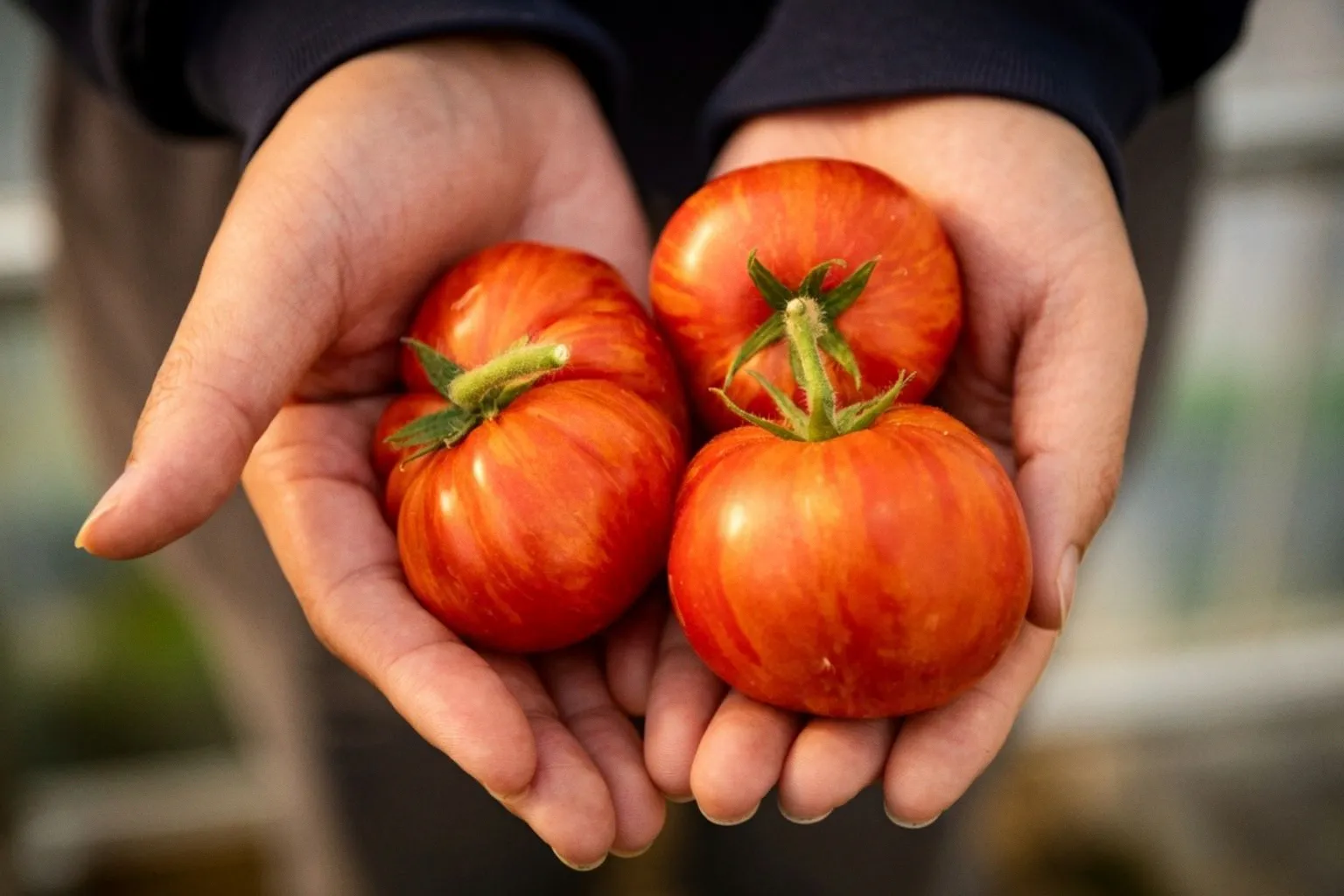
The gene-edited line accumulates high levels of pro-vitamin D3 in both fruit and leaves, establishing a plant-based route to vitamin D3. The notice advances the project toward commercialisation, but it does not constitute FSA approval; an application to the FSA is still the next stated regulatory step. For the fortification sector, the decisive work now shifts to conversion control, finished-food recovery, and documented bioavailability.
The biochemical handoff
The John Innes Centre describes pro-vitamin D3 as a compound that tomatoes produce naturally as an intermediate before converting related material into compounds used for plant defence. Its edited line changes that pathway. The targeted genetic modification directs much more pro-vitamin D3 into the fruit and leaves.
The accumulated precursor is not automatically the final nutrient. Exposure to sunlight, or the application of UVB light to the plants, converts it into vitamin D3. The centre describes D3 as the more stable form useful to humans.
This creates two distinct production requirements. First, the plant system must accumulate the precursor consistently. Second, a light-based treatment must generate vitamin D3. The supplied material does not establish whether a commercial process would use natural sunlight or a controlled UVB operation. It also does not report exposure conditions or conversion performance.
The reported agronomic result removes one potential constraint. According to the centre, the genetic change did not affect plant appearance, growth, or yield. The centre further states that each tomato could contain as much vitamin D as two eggs or 28 grams of tuna. That is a potential concentration claim, not a finished-product specification. Batch uniformity, conversion yield, and retention data are not reported.
The leaves should not be treated as an automatic processing feedstock. The supplied source does not assign them a commercial role or describe an extraction operation. The current nutritional proposition centres on the tomato fruit.
The remaining cultivar route
The next biological operation is crossing the edited plants with sweeter-tasting and striped varieties intended for marketing as “Sunshine.” This is not a cosmetic step. The final cultivar must retain the high pro-vitamin D3 phenotype while meeting the stated sensory and visual targets. The source confirms the breeding direction but does not report results for the final combination.
Regulatory status requires the same discipline. The marketing notice is an important milestone, and the John Innes Centre identifies the tomato as the first crop to receive PBO marketing approval at the institute. It is not the FSA decision required to take the product to market in England. Until that application is reviewed, “closer to market” is supported. Availability for sale is not.
A near-term monitoring point is identified. The centre says project manager Diego Durantini will attend the British Tomato Growers Association’s 2026 British Tomato Conference on 24 September. Teams following the project should record the final cultivar identity, selected light-conversion method, measured D3 content in the intended food, and status of the FSA application.
The source does not state that all these data will be presented at the conference. It identifies the event as a place where the project can be discussed. Subsequent technical or regulatory documentation will therefore remain necessary.
What remains before scale-up
Precursor concentration and edited agronomy are only the first part of a food-fortification system. The supplied record does not state a commercial UVB dose, exposure time, conversion rate, energy demand, throughput, recovery after preparation, or stability during storage. It provides no cost per unit of vitamin D3. Those parameters must be measured before a reproducible industrial specification can be assessed.
Bioavailability must also be separated from precursor abundance. The tomato was recently the focus of a study at the Quadram Institute testing bioavailability, but the supplied material does not report the result. Potential vitamin D content therefore cannot be presented as demonstrated absorption or nutritional efficacy. The comparison with eggs and tuna does not replace a bioavailability measurement.
The current benefit is a plant line that accumulates high levels of pro-vitamin D3 in fruit and leaves without a reported change in appearance, growth, or yield. The remaining inputs are a defined conversion protocol, D3 performance in the intended product, bioavailability data, stability results, and an FSA decision. “Sunshine” is one step closer to market because its marketing notice was approved. It is not yet a validated commercial ingredient specification.